
Water damage service · Lancaster, CA
Water Damage Repair in Lancaster, CA
Water damage repair is the rebuild after the house is dry. It means new drywall, flooring, ceilings and cabinets where the old ones could not be saved. Call (661) 592-2877 to be connected with an independent restoration company that serves your area.
- Free callYou pay this site nothing
- Line open 24/7Calls answered day and night
- No obligationGet an estimate, then decide
- Lancaster, CAZIP 93534 · 93535 · 93536
- License check guideHow to look up a CSLB license
Free referral service, not a contractor. You are connected with an independent restoration company. How this works
Is the house ready for repairs yet?
Only when the drying is finished and moisture readings prove it. Covering wet framing or a wet subfloor with new materials can trap water and lead to mold.
Water removal and drying come first. That part is often called mitigation. It is covered on our emergency water removal page.
Ask the company for its final moisture readings before the rebuild starts. Readings should be taken with a moisture meter on the same spots that were wet. Keep a copy for your records and your insurer.
Not sure if it's dry? Call (661) 592-2877.
What can be saved, and what has to be replaced?
It depends on the material, how long it stayed wet and what kind of water it was. Clean water caught early gives you the best chance of saving things.
Drywall
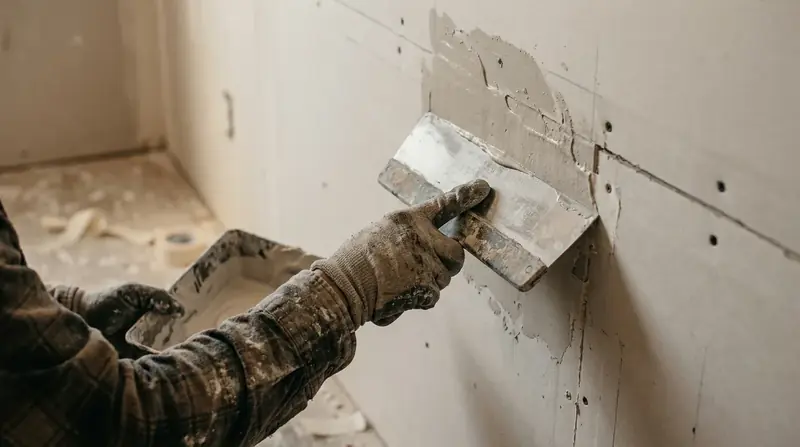
Wet drywall can sometimes be dried in place. The EPA's mold cleanup guide says wallboard may be dried in place if there is no obvious swelling and the seams are intact. If not, it is removed and replaced.
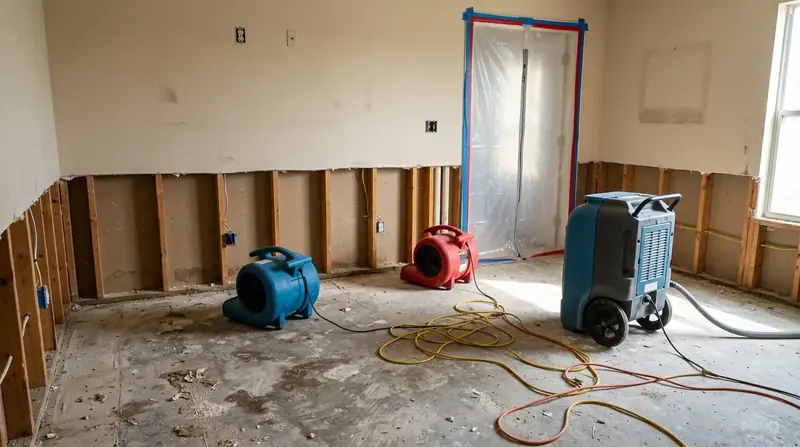
Drywall soaked by sewage or floodwater is usually cut out. Cutting the wall a set height above the water line is called a flood cut. It lets the company remove wet insulation and dry the studs behind it.
Insulation
Wet insulation is usually thrown out. The EPA guide says to discard and replace wet fiberglass and cellulose insulation. A review we read of a local company complained about thinner insulation going back in than code required. Ask what will be installed.
Floors
Laminate has a pressed-wood core that swells when it soaks up water. Swollen laminate usually does not flatten again, so it is often replaced. Vinyl plank may be lifted and the floor under it dried, depending on the product.
Hardwood can sometimes be saved if drying starts right away. The EPA guide says to remove moisture from wood quickly with dehumidifiers, gentle heat and fans. Boards that stay cupped or buckled after drying may need sanding or replacement.
Subfloor
A plywood or particleboard subfloor that is still wet needs more drying, not new flooring on top. If it stays soft, separates into layers or grows mold, it is usually cut out and replaced. This often comes up after a dishwasher or washer leak.
Cabinets and baseboards
Solid wood cabinets can sometimes be dried. Cabinets with particleboard bottoms often swell and may need new panels or replacement. Baseboards are often pulled off so the wall behind them can dry, then reinstalled or replaced.
How do you repair a ceiling after a leak from above?
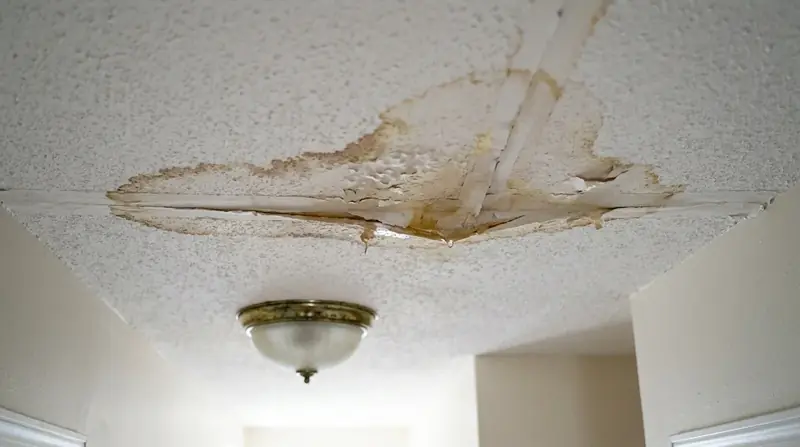
Stop the leak, dry the space above the ceiling, then replace any drywall that sagged or stained through. A sagging ceiling can hold water and fall, so keep people out from under it.
Turn off the power to any light fixture in the wet ceiling. Do it at the breaker if you can reach the panel safely. Then put a bucket under the drip and take photos. For the first hour of a ceiling leak, see ceiling and roof leak water damage.
The leak could come from a roof, an AC condensate line, a water heater in the attic or an upstairs unit. Find and fix the source first. See water heater and appliance leaks or flood damage restoration for roof leaks.
A small stained spot may only need sealing primer and paint once it is dry. Drywall that sagged or crumbled is cut out and replaced. Wet ceiling insulation above it usually comes out too.
Do you need a permit for water damage repairs?
Some repairs do and some don't. Who issues the permit depends on where you live.
Inside Lancaster city limits, permits come from the City. The City's permits page says replacing a concealed pipe needs a permit. It also says roof repair of up to 100 square feet, or 10% of the roof within 12 months, is exempt.
In unincorporated areas like Quartz Hill, Lake Los Angeles and Antelope Acres, permits come from LA County Building & Safety. We have not confirmed whether drywall-only repairs need a permit in either place. Ask the company or call the permit office before work starts.
A licensed contractor should know which office applies. In California, a job of $1,000 or more in labor and materials must be done by a contractor licensed with the Contractors State License Board (CSLB). So must any job that needs a permit.
Do older Lancaster homes need an asbestos check before demolition?
Often, yes. Asbestos can be found in some older building materials, and cutting into them can release fibers. The air district rule below asks for a survey before most demolition or renovation work.
Older homes are common here. In ZIP code 93534, about a quarter of homes were built before 1960 (U.S. Census Bureau, ACS 2020–2024). Quartz Hill's median home was built in 1976.
The Antelope Valley Air Quality Management District's Rule 1403 says a building must be surveyed for asbestos before any demolition or renovation. The rule was last amended in 1994 and is still in the district's rule book.
The rule has exceptions for some renovation jobs in single-family homes. Apartments, condos and townhouses don't count as single-family homes under the rule. One exception is an owner who lives in the home and does the renovation personally. Another skips the survey when less than 100 square feet of asbestos material is removed.
The EPA advises that a trained and accredited asbestos professional take any samples. It warns that sampling done wrong can be riskier than leaving the material alone. So don't break off pieces to test yourself.
Ask the company before demolition starts:
- Does this job need an asbestos survey?
- Who takes the samples, and which lab tests them?
- If asbestos is found, who removes it?
The cost and the answer depend on your home and the job. This is general information, not legal advice.
Should the same company dry the house and do the rebuild?
It can work either way. One company for both means one contract and one point of contact. Two companies can mean a better fit for the rebuild, but more coordination.
In a sample of Google reviews we read for Antelope Valley restoration companies, several customers praised having one company handle both. One low-star review described a rebuild that was promised after the dry-out but moved slowly.
Before you decide, ask:
- Does your company do the rebuild itself, or use a general contractor?
- Will I get a written scope and estimate for the rebuild before it starts?
- Who pulls the permits?
- What is the expected start date?
You can get a second estimate for the rebuild. You can also choose a different contractor than the one who dried the house, though your insurer may want to review the estimate.
How do you move from drying to rebuild?
Get the drying records, then get a written scope for the repairs. The scope lists each room, each material and each line item.
The usual order:
- Final moisture readings showing the materials are dry.
- A written repair scope and estimate. It should match the damage you photographed.
- Insurer review, if you filed a claim. The adjuster may compare the estimate with their own.
- Permits, if the job needs them.
- Repairs: framing, insulation, drywall, paint, flooring, trim and cabinets.
- A final walk-through before you sign off.
If furniture and belongings were moved out, ask about the contents pack-out inventory. That is the list of items boxed and stored during the job. Check it before items come back.
For what to expect on price, see the water damage restoration cost guide. For the claim side, see water damage insurance claims in California.
What caused the damage, and does that change the repair?
Yes. The cause decides what kind of water it was, what had to come out and what insurance may look at.
- Burst pipe water damage: often clean water, so more materials can be saved if drying starts fast.
- Slab leak water damage: the floor may need to come up so a plumber can reach the pipe.
- Water heater and appliance leaks: cabinets, subfloors and garage walls are common repairs.
- Flood damage restoration: floodwater is treated as dirty water, so more gets removed.
- Sewage cleanup: porous materials touched by sewage are usually thrown out.
- Mold remediation: needed if materials stayed wet too long.
To see how this site and the companies we connect you with work, read how this works and about us.
Get help with water damage repair in Lancaster
Call (661) 592-2877 to be connected with a restoration company that serves your area. Ask for a written scope and estimate before any demolition or rebuild starts.
Lancaster Water Damage Restoration is a free referral service, not a contractor. When you call, you're connected with an independent restoration company that serves your area. Your call may first be answered by a screening call center. That company gives you its own estimate, contract and license details. Check them before you sign anything.
The call is free. Calls are answered 24 hours a day, 7 days a week.
Water in your Lancaster home right now?
Shut off the main water valve, then call. You will be connected with an independent restoration company that serves your area.
Free call · referral service, not a contractor