
Water damage service · Lancaster, CA
Mold Inspection and Testing in Lancaster, CA
A mold inspection looks for mold and for the water feeding it. Testing takes samples for a lab, and it isn't always needed. Call (661) 592-2877 to be connected with a company that does mold inspection in your part of Lancaster, CA.
- Free callYou pay this site nothing
- Line open 24/7Calls answered day and night
- No obligationGet an estimate, then decide
- Lancaster, CAZIP 93534 · 93535 · 93536
- License check guideHow to look up a CSLB license
Free referral service, not a contractor. You are connected with an independent restoration company. How this works
Do you need a mold inspection?
You may, if you smell must, saw a stain or had a leak that wasn't dried fast. An inspection finds where the moisture is and how far the mold has spread.
Common reasons people in Lancaster call:
- a musty smell with no mold in sight
- a ceiling or wall stain after an AC, roof or plumbing leak
- a leak that sat for days before anyone found it
- a home you're about to buy with a past leak or claim
- a rental unit where the tenant and landlord disagree about mold
- a check after mold cleanup, to see if the job is done
If you can already see a small patch of mold on a hard surface, you may not need an inspection at all. Our mold remediation page explains when a small patch is safe to clean yourself.
Why does a dry desert home get mold?
Because the mold here comes from trapped water, not humid air. Lancaster gets about 6.8 inches of rain a year (NOAA 1991–2020 normals, Fox Field).
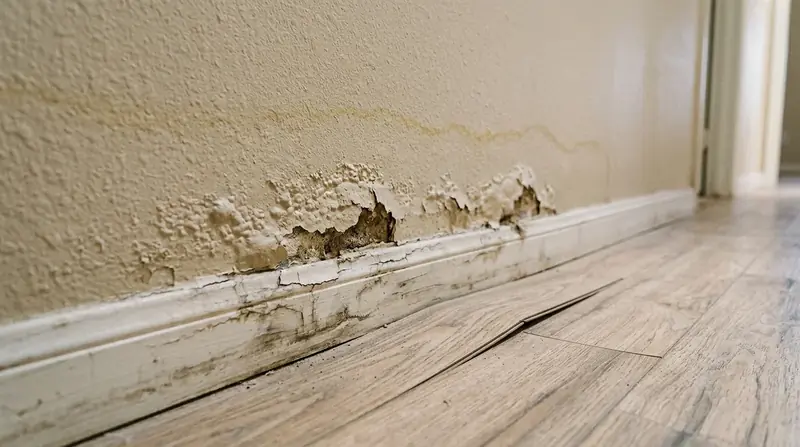
The dry air helps surfaces you can see dry out. It doesn't reach water inside a wall, under a floor or above a ceiling. That hidden moisture is what an inspector is hunting for.
Common sources in Lancaster homes:
- a slab leak under the floor
- an AC condensate line that overflows into the ceiling in summer
- a swamp cooler leak on the roof that wets the ceiling below
- a dripping supply line, dishwasher or water heater, covered on our water heater and appliance leaks page
- a roof leak after a winter storm
What happens during a mold inspection?
The inspector looks, measures moisture and tracks down the water source. Lab samples are a separate step, and not every inspection needs them.
A typical visit includes:
- Questions first. When did the leak happen, what got wet, and where do you smell it?
- A visual check of walls, ceilings, floors, cabinets, closets and the water heater area.
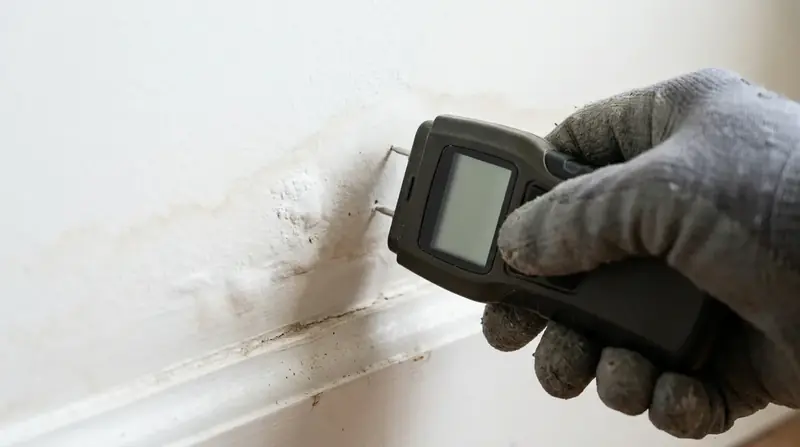
- Moisture readings. A moisture meter is a handheld tool that measures how wet a material is. It shows how far the water spread.
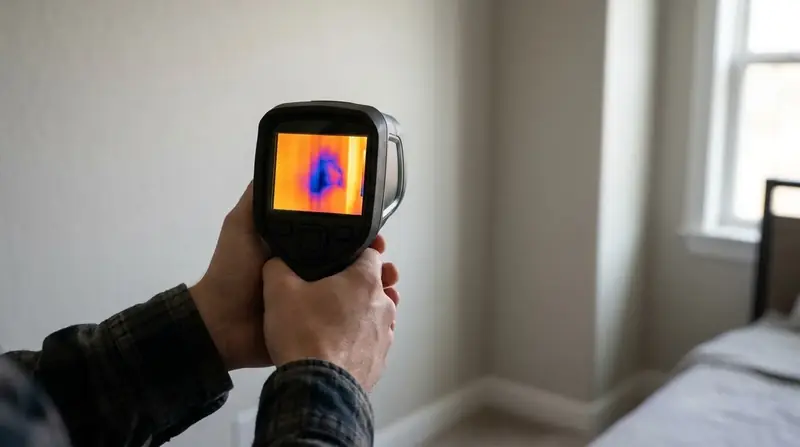
- A thermal camera, often. A thermal imaging camera shows temperature differences. A cool patch on a wall may be wet, so the inspector checks it with the meter.
- Samples, if they make sense. See the next section.
- A written report with what was found and what to do next.
A thermal camera does not see mold. It also doesn't see through walls. It only shows that one spot is warmer or cooler than the area around it, so a meter has to confirm what it means.
Don't cut into walls to look for mold yourself. The EPA warns that disturbing hidden mold, like peeling back wallpaper, can release a lot of spores.
Smell mold but can't find it? Call (661) 592-2877.
When is mold testing worth it?
Testing helps when it answers a question you can't answer by looking. If you can already see mold, a test usually adds little.
The EPA says that "in most cases, if visible mold growth is present, sampling is unnecessary." The CDC says it does not recommend mold testing. It also says good sampling can be expensive (CDC, updated September 2024).
There are no EPA rules or standards for mold in indoor air. The EPA says limits for airborne mold have not been set (EPA, updated January 2026). So a test can't tell you a home "passes" or "fails".
Testing may still help in a few cases:
- A musty smell with no visible mold, to help point to a hidden source.
- After cleanup, to check that the area was cleaned well. The EPA says surface sampling may help show that.
- A dispute, such as between a tenant and landlord, or a buyer and seller, where a written record matters.
Before you pay, ask the inspector one thing. "What will the result change about what we do next?" If the answer is "nothing," you may not need the test.
What kinds of samples are there?
Air samples and surface samples are the two common types. Air samples pull a set amount of indoor air through a device. Surface samples use tape or a swab on a spot that looks moldy.
An air test is usually compared with an outdoor sample taken the same day. Mold spores are normal in outdoor air, so the indoor number only means something next to the outdoor one.
The EPA says sampling should be done by professionals with specific experience in planning mold sampling. It says labs should follow methods from groups like the American Industrial Hygiene Association.
Do DIY mold test kits work?
They can show that mold spores are present, but that's true of almost every home. The EPA says it's impossible to get rid of all mold and spores indoors.
A kit from the hardware store usually doesn't tell you where the mold is growing. It also doesn't find the water source.
A better first step costs nothing. Check under sinks, around the toilet base, in the water heater closet, behind the washer and near the AC drain. Our guide to signs of hidden water damage and mold shows what each sign usually means.
How much does mold inspection cost?
National figures put the average around $500, with a typical range of $450 to $800 (Fixr, updated January 2025). Fixr lists a low of about $300 for a small home with one sample. Its high is about $1,000 for a larger home.
Extra samples can add to the bill. Fixr says an inspector may charge about $60 to $80 for each additional sample. These are national numbers. They are not Lancaster prices or a quote from any company you're connected with.
Ask for the price in writing before the visit. Ask how many samples are included and whether the report costs extra. Whether insurance pays for testing depends on your policy and on what caused the water.
Should the same company test and remove the mold?
Some people prefer that it doesn't. A company that also does the removal could earn more if the test finds a problem.
That doesn't mean a company that does both is dishonest. Many do inspections as the first step of a job. But you can ask questions that protect you:
- Do you also do mold remediation? If so, will you do the removal on my home?
- Who takes the samples, and which lab analyzes them?
- Can I get the full lab results, not just a summary?
- Will a different person or company do the check after cleanup?
If you want an independent opinion, you can hire one company to inspect and another to remove. You can also have a second company test after the work is done.
When you call (661) 592-2877, tell the screener if you want an inspection only. Then ask the company you're connected with whether it also does removal.
What should a mold inspection report include?
A good report shows what was checked, what was found and why. It should be clear enough for a second company to follow.
Ask for a report that includes:
- the rooms and areas checked
- moisture readings and where each was taken
- photos of stains, mold and wet spots
- the likely water source
- where each sample was taken, including an outdoor sample for air tests
- the lab's name and the full lab results
- what the inspector recommends next, and why
If the report recommends removal, ask how big the affected area is. The EPA says a patch under about 10 square feet can usually be cleaned by the homeowner. Our mold remediation page covers how the cleanup works.
Your mold test came back high. What next?
Don't panic, and don't start tearing out walls. A lab number alone doesn't tell you how risky the mold is for your family.
The CDC says you can't rely on sampling to know whether someone might get sick. The California Department of Public Health (CDPH) says the things tied to health effects are water damage, damp materials, visible mold and mold odor. It says the number or type of spores is not (CDPH statement, updated 2016).
Next steps:
- Compare the indoor result with the outdoor sample. Ask the inspector to explain the difference.
- Find the water. Mold that has no moisture source usually doesn't keep growing.
- Fix the leak and dry or remove wet materials. That is what CDPH recommends.
- Talk to a doctor if anyone has symptoms. This page is not medical advice.
How do you know mold cleanup is finished?
The water problem is fixed, the mold and moldy materials are gone, and the musty smell is gone. Those are the main signs the EPA lists in its remediation guide.
The EPA guide also says the area should show no signs of water damage or mold when it's checked again shortly after the work. People should be able to move back in without health complaints. The EPA calls the final decision a judgment call.
A test after cleanup is often called a clearance test. The EPA says testing before and after cleanup may help show whether the work worked. After cleanup, the types and amounts of mold in indoor air should be similar to the outdoor air.
Ask before the job starts whether a check after cleanup is included, and who does it.
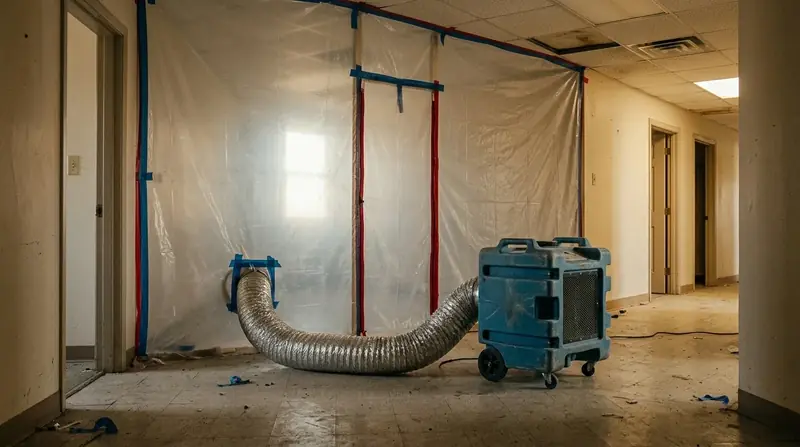
You rent and suspect mold. What can you do?
Tell your landlord in writing, keep a copy and take dated photos. This is general information, not legal advice.
California's Health and Safety Code section 17920.3 lists "dampness of habitable rooms" as a substandard housing condition. It also lists visible mold growth, as determined by a health officer or code enforcement officer. Minor mold on surfaces that collect moisture, like a shower, is excluded.
The Toxic Mold Protection Act includes disclosure rules for landlords. Those rules can't take effect until the state sets mold exposure limits. CDPH said in 2016 that no state limits had been set. So a lab test alone usually doesn't settle a dispute with a landlord or property manager.
A written inspection report with photos and moisture readings can still help you show what's wrong. Central Lancaster has many renters, and our water damage help in central Lancaster page covers local rental issues.
Buying a home with a past leak?
An inspection can help, but a standard home inspection doesn't open walls. Ask your home inspector whether they use a moisture meter or a thermal camera.
If you smell must, see fresh paint on one old wall or find stains, a separate mold inspection may be worth it before your deadline. Our guide to buying a home with water damage history covers what to ask the seller and what California disclosures say.
Get a mold inspection in Lancaster, CA
Call (661) 592-2877 to be connected with a company that does mold inspection and testing in your area. Ask what the visit includes, what it costs and whether samples are needed. Get the price in writing first.
If mold is found, the next step is fixing the water and cleaning it up. See mold remediation in Lancaster or browse all water damage services. To see how this site works, read how this works.
Lancaster Water Damage Restoration is a free referral service, not a contractor. When you call, you're connected with an independent restoration company that serves your area. Your call may first be answered by a screening call center. That company gives you its own estimate, contract and license details. Check them before you sign anything.
The call is free. Calls are answered 24 hours a day, 7 days a week.
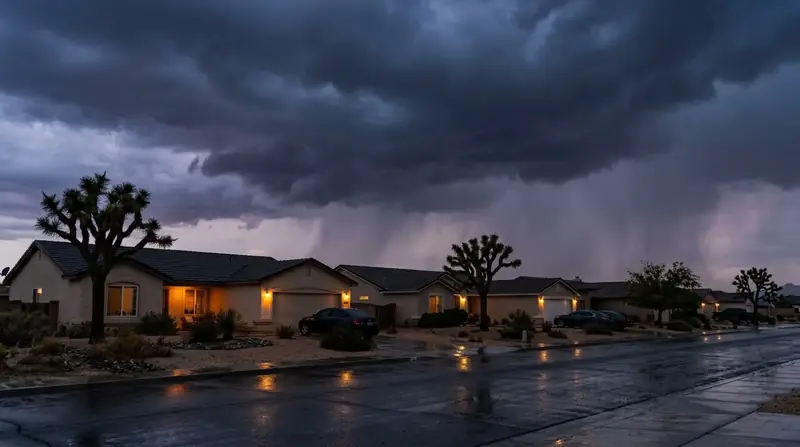
Water in your Lancaster home right now?
Shut off the main water valve, then call. You will be connected with an independent restoration company that serves your area.
Free call · referral service, not a contractor