
Lancaster, CA
Water Damage Insurance Claims in California: What's Covered and How to File
Homeowners insurance usually pays for sudden water damage, like a burst pipe. It usually doesn't pay for slow leaks or floods. This guide explains how that works in California, what to document, and what to do if a claim is denied.
- Free callYou pay this site nothing
- Line open 24/7Calls answered day and night
- No obligationGet an estimate, then decide
- Lancaster, CAZIP 93534 · 93535 · 93536
- License check guideHow to look up a CSLB license
Free referral service, not a contractor. You are connected with an independent restoration company. How this works
Does homeowners insurance cover water damage in California?
Usually yes, if the damage was sudden and accidental. Usually no, if it came from a slow leak, poor upkeep or a flood. The final answer depends on your policy.
The California Department of Insurance says homeowners policies do not cover flood damage. It adds that they may cover other kinds of water damage. A pipe that bursts without warning is a common example of covered damage.
Every policy has its own wording, limits and exclusions. Read yours before you assume anything. You have a right to a full copy of your policy, including the declarations page. Your insurer must provide it free within 30 days of your request, the Department says.
What type of water damage is covered: sudden or gradual?
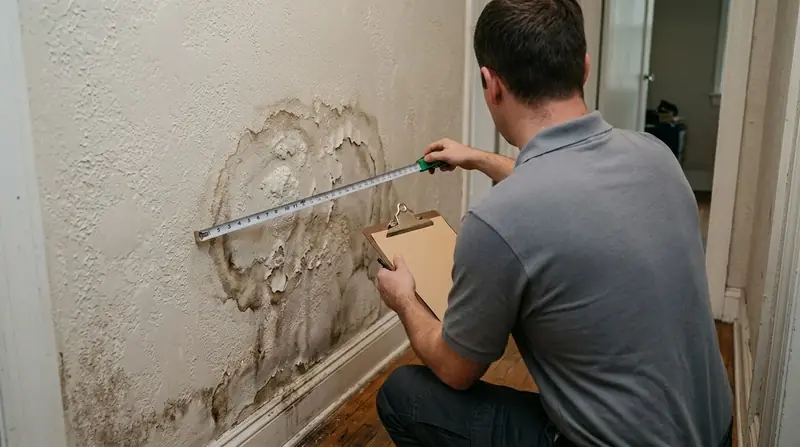
Sudden damage is usually covered, and gradual damage usually isn't. Amica, a home insurer, says standard policies typically cover "sudden and accidental" water damage. It also says gradual damage is commonly excluded.
Usually covered (sudden):
- a supply line or pipe that bursts
- a water heater that suddenly fails and floods the garage
- a washing machine hose that splits
Usually not covered:
- a leak that has dripped for months
- damage from poorly maintained plumbing or heating and cooling equipment, per Amica
- wear and tear or neglect
- flood and surface water
- sewer or drain backup, unless you bought an add-on for it (Amica)
A slab leak can fall in between. A slab leak is a break in a water line under the concrete floor. Some policies pay for the damage the water caused but not for fixing the pipe itself. A commenter on a Lancaster Reddit thread described that split, though it's one person's report.
Does flood damage need separate insurance?
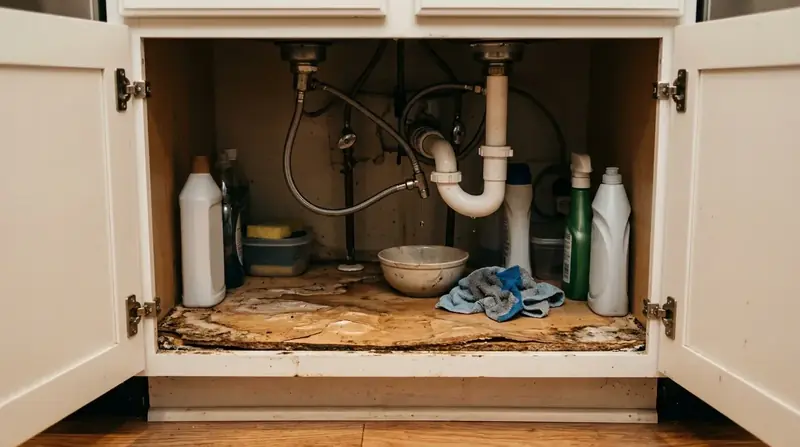
Yes. The California Department of Insurance notes that standard homeowners policies exclude flood. Flood coverage comes from a separate policy, such as one through the National Flood Insurance Program (NFIP).
Timing matters. FloodSmart, the NFIP's official site, says a new policy usually takes effect 30 days after purchase. A few exceptions apply, such as a policy bought along with a mortgage. Buying one when a storm is already on the way is usually too late.
Rain that comes in through a roof hole made by wind is different from flooding. The Department says that kind of water damage may be covered. Ask your insurer how your policy treats it.
Read more: flood damage restoration.
What if you have a California FAIR Plan policy?
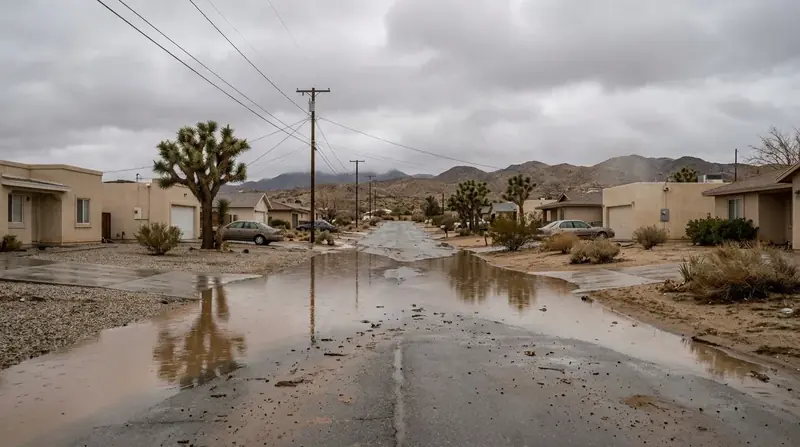
The standard California FAIR Plan policy is a limited fire policy. It doesn't cover water damage. The California Department of Insurance says you need a separate difference-in-conditions (DIC) policy for that.
A DIC policy is a second policy that fills gaps the FAIR Plan leaves, such as water damage. If you have a FAIR Plan policy and no DIC policy, a burst pipe may not be covered at all. Check your declarations page or ask your agent.
What should you do first after water damage?
Stop the water, protect the house from more damage, and document everything. Then report the claim.
- Stop the source. Shut off the main water valve or the fixture's shutoff valve.
- Make temporary repairs. The Department of Insurance says to make temporary repairs that keep your property from further damage.
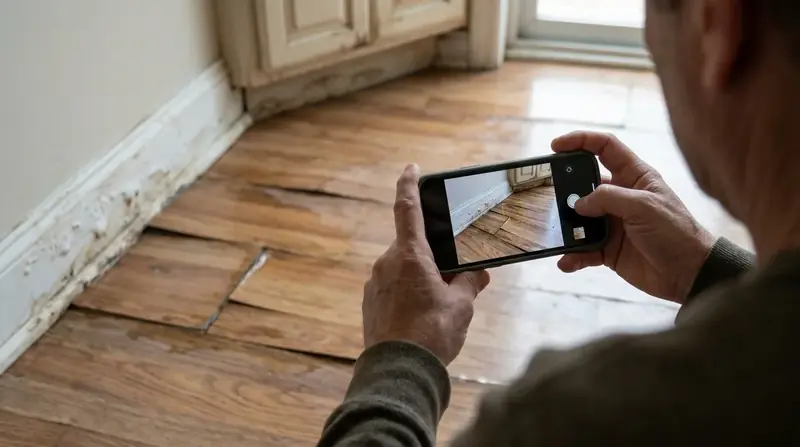
- Take photos and keep records. The Department says to photograph the damage and keep records of all cleanup and repair costs.
- Wait on permanent repairs. The Department advises not to make permanent repairs until the adjuster has inspected. An adjuster is the person your insurer sends to look at the damage and decide what it pays.
- Report the loss promptly. Use your insurer's claim line or app.
- Start a claim diary. The Department suggests writing down every conversation with your insurer and adjuster.
The first hour is covered step by step in what to do after water damage.
What should you say when you report a water damage claim?
Describe what you saw, accurately and simply. Don't guess about the cause or how long the leak ran.
Good details to give:
- when you found the water
- where it was coming from, if you know
- which rooms and materials got wet
- what you did to stop it
If you don't know something, say so. "I'm not sure how long it was leaking" is an honest answer. Never change the facts to fit what you think the policy covers. A false statement can put the whole claim at risk. If the cause is unclear, a plumber's written report can help explain it.
What documentation do insurance adjusters need?
Adjusters usually want proof of the damage, the cause and the cost. The more you can show, the fewer questions you will get later.
Keep these:
- Photos and video of the damage and the source, taken before anything is moved.
- The broken part, like a burst supply line, failed valve or the old water heater. Ask your insurer before throwing it away.
- The plumber's invoice or report naming the cause.
- Daily moisture readings and the drying log from the restoration company.
- A written estimate or scope of work. A scope of work is a room-by-room list of what will be done.
- Receipts for emergency costs, like equipment, supplies or a hotel.
- Your claim diary.
The Department of Insurance also suggests getting at least one repair estimate of your own. That gives you a sense of the real cost to compare with your insurer's numbers.
Your insurer may settle the claim based on its own written estimate. If so, California rules require it to give you a copy of each document behind the settlement. That rule is in the California Code of Regulations, Title 10, section 2695.9.
Can the restoration company start before insurance approves the claim?
Often yes, for emergency drying. Waiting days for approval can let more damage happen. The Department of Insurance tells homeowners to make temporary repairs to prevent further damage.
Removing water and drying is called mitigation. It's usually treated as protecting the home from more damage. Rebuilding is different, and the Department advises waiting for the adjuster before permanent repairs.
Before work starts:
- Tell your insurer that emergency drying is starting.
- Get a written estimate or scope of work.
- Take photos before any drywall or flooring is removed.
- Keep wet materials or photos of them until the adjuster says otherwise.
How do I get paid back for mitigation I paid for myself?
Send your insurer the paid invoice, photos and drying records. Ask in writing how they will review it. Whether and how much they repay depends on your policy and on what they accept as reasonable.
Do you have to use your insurer's preferred vendor?
No, not in California. State claims rules say an insurer can't require you to have your property repaired by a specific person or company (Title 10, section 2695.9).
An insurer may suggest a company only in certain cases. One is when you ask for a referral. Another is when you've been told in writing that you can choose your own. If you pick the company the insurer suggested, the rules say the repairs must restore the property to its condition before the loss.
A preferred vendor is a contractor on your insurer's suggested list. Using one is your choice. Your policy limits, deductible and approved amounts still apply either way. Ask your adjuster how they will review a bill from a company you choose.
Will insurance pay for a hotel while your home dries?
Often, if a covered loss makes your home unlivable. Most homeowners policies include loss-of-use coverage, also called additional living expenses (ALE). It pays for a hotel or extra living costs, up to your policy's limit.
What counts as "unlivable" depends on your policy and your insurer. No working kitchen or bathroom is a common reason. Loud drying equipment alone may or may not qualify, so ask before you book. Keep every receipt.
Can they deny hotel costs because the pipe repair isn't covered?
The answer depends on your policy wording. Some policies cover the water damage but not the broken pipe itself. Ask the insurer to put its reason in writing and name the policy section it relies on. California rules require a written denial to list every reason for it (Title 10, section 2695.7).
Will insurance replace all matching flooring or only the damaged part?
Under California rules, it may have to replace more than the wet boards. When replaced items don't match in quality, color or size, the insurer must replace all items in the damaged area for a reasonably uniform look (Title 10, section 2695.9).
That rule applies to policies that settle on replacement cost. It doesn't promise new floors for the whole house. How far "the damaged area" goes is often argued over, especially with hardwood or laminate that runs through several rooms. Ask the adjuster to explain their decision in writing.
What is the average water damage claim payout?
We found no California-only figure. Across the U.S., the average homeowners claim for water damage and freezing was $15,400 from 2019 to 2023, according to the Insurance Information Institute.
Your payout depends on your damage, your coverage and your deductible. If damage falls below your deductible, the Department of Insurance says the insurer generally isn't required to pay. Read more: water damage restoration cost in Lancaster, CA and is a water damage claim worth filing?
What can you do if your water damage claim is denied?
Ask for the denial in writing, read the reason, and ask for a review if you think it's wrong. You can also contact the Department of Insurance.
California claims rules set these standards (Title 10, section 2695.7).
- After it receives proof of your claim, the insurer has up to 40 calendar days to accept or deny it, in whole or in part.
- A denial must be in writing and list every reason for it.
- If it relies on a policy section, the denial must name it and explain how it applies.
- The notice must tell you that you can ask the Department of Insurance to review the claim.
A claim denied as an "ongoing leak" often turns on evidence. Moisture readings, photos and a plumber's report can help show what happened. If the insurer re-inspects, you can ask the restoration company and plumber to share their records. Some may also agree to be there. In a sample of Google reviews we read for Antelope Valley companies, customers often praised help with the insurance claim, and some mentioned the company meeting the adjuster on site.
Other denials turn on an exclusion, such as damage from a chewed or worn-out appliance line. Ask which exclusion applies. Then read that section of your policy yourself.
What is an assignment of benefits?
An assignment of benefits (AOB) means signing your insurance payments for the job over to a contractor. The contractor then deals with the insurer for payment.
Read any AOB slowly before signing. Ask what happens if the insurer pays less than the bill. Ask whether you could owe the difference. Don't sign one under pressure or with blank spaces.
Read more: how to choose a water damage company in Lancaster, CA and who pays for water damage.
Where can you get free help with a California claim?
The California Department of Insurance runs a free consumer hotline at 800-927-4357. It also has an online chat on its website. It can answer questions about your rights. To complain about how a claim is handled, you can file a Request for Assistance with the Department.
Need the damage looked at first?
An adjuster will want to see the damage and a written scope. Call (661) 555-0123 to be connected with a restoration company that serves your area. Calls are answered 24 hours a day, 7 days a week. Ask how they work with insurers before you sign anything.
Lancaster Water Damage Restoration is a free referral service, not a contractor and not an insurance company. When you call, you're connected with an independent restoration company that serves your area. That company gives you its own estimate and contract. It decides for itself how it works with insurers.
This page is general information, not legal advice. Your own policy decides what is covered. For help with a specific claim, call the California Department of Insurance hotline at 800-927-4357.
Water in your Lancaster home right now?
Shut off the main water valve, then call. You will be connected with an independent restoration company that serves your area.
Free call · referral service, not a contractor