
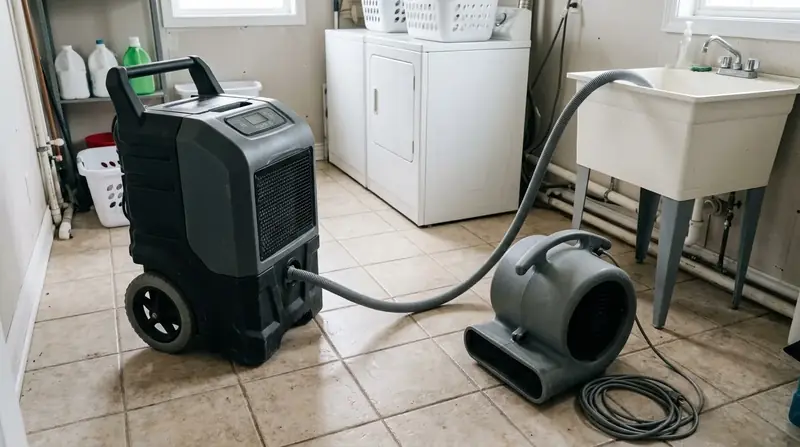
Lancaster, CA
How Long Does Water Damage Restoration Take?
Drying usually takes several days, not hours. Repairs come after that and can take longer. The real end date is set by moisture readings, not by the calendar.
- Free callYou pay this site nothing
- Line open 24/7Calls answered day and night
- No obligationGet an estimate, then decide
- Lancaster, CAZIP 93534 · 93535 · 93536
- License check guideHow to look up a CSLB license
Free referral service, not a contractor. You are connected with an independent restoration company. How this works
How long does water damage take to dry before repairs can start?
Most clean-water jobs take a few days of drying. Dirty water and dense materials take longer. Repairs should wait until readings show the materials are dry.
Restoration companies often quote drying times in their own videos. One California company's YouTube explainer says the machines run for three to five days straight. Another company says in a video that it serves Lancaster. It gives about 2 to 4 days to restore minor clean-water damage and 5 to 10 days for sewage backups, not counting rebuild. Those are the companies' own claims, not a rule.
What matters is when drying starts. The EPA advises drying water-damaged areas within 24 to 48 hours to prevent mold growth. A delay at the start can add days, or turn a dry-out into a tear-out.
Be wary of anyone who promises a whole house dry in 24 hours. Water inside walls and under floors leaves slowly.
How long does the whole job take, drying plus rebuild?
The whole job is drying time plus repair time. Drying is often measured in days. The rebuild can run from days to weeks, depending on what was removed.
Each stage has its own clock:
| Stage | What sets the time |
|---|---|
| Water removal | How much water there is and how far it spread |
| Tear-out | How much carpet pad, drywall or flooring can't be saved |
| Structural drying | The materials, the water category and the weather |
| Insurance review | When the adjuster can inspect and approve the scope |
| Rebuild | Permits, materials on order and contractor schedules |
Structural drying means drying the walls, floors and framing, not just the surface. Our water damage restoration process page explains each stage. The water damage repair page covers the rebuild and permits.
Water still on the floor? Call (661) 592-2877.
Does Lancaster's dry desert air make drying faster?
It helps surfaces dry faster, but it doesn't speed up water trapped inside walls or under floors. Hidden water still needs machines and time.
Lancaster gets about 6.8 inches of rain a year (NOAA 1991–2020 normals, Fox Field). The high desert air is usually dry. A restoration company that says it serves Lancaster claims in a video that materials here dry faster than in humid coastal areas. That fits what you'd expect for open surfaces.
Inside a drying room, though, the crew controls the air. Windows are often kept closed so the dehumidifier can work. So the outdoor air matters less than you might think.
The desert air also fools people. Paint and baseboards can feel dry while the drywall behind them is still wet. That is why a moisture meter, not touch, decides when drying is done.
How do freezing nights change the timeline?
Cold slows drying. Winter is also when frozen pipes are most likely to burst.
Fox Field averages 19.9 nights at or below freezing in December and 18.0 in January (NOAA 1991–2020 normals). That is about 68 freezing nights a year. Cold air slows the move of water out of wet materials.
In winter, the crew may need to keep the house heated during drying. Ask the company you're connected with what room temperature they want. Don't switch off the heat to save money while machines are running.
Freeze season is also when burst pipes are most likely. See burst pipe water damage if a frozen pipe caused your leak.
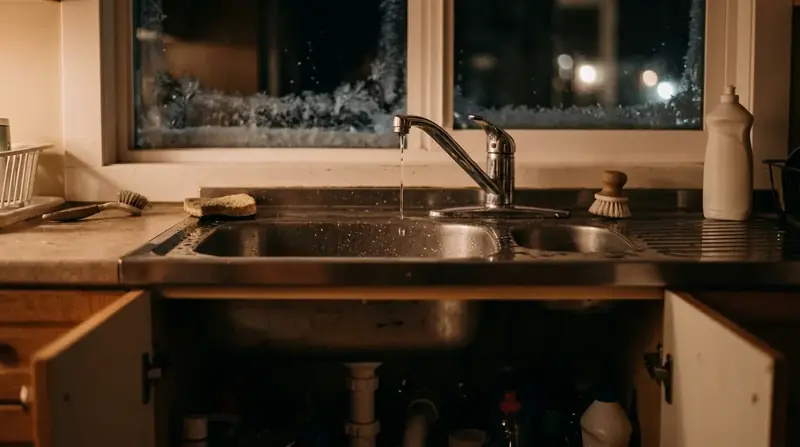
What about summer heat? How do you keep a room cool while dehumidifiers run?
Dehumidifiers give off heat as they work, so drying rooms get warm. Ask the company before you change the thermostat or open windows.
Fox Field averages about 36 days a year at 100°F or hotter, mostly in June to September (NOAA 1991–2020 normals). A closed room full of running machines adds to that heat.
Running the air conditioning can help, since it also pulls some water from the air. But every setup is different. Some crews want doors closed and windows shut, so the dehumidifier isn't fighting hot, outside air. Ask before you change anything, and say if the heat is a health risk for anyone at home.
What if the power goes out during drying?
Drying stops when the power stops. If an outage lasts hours, the job can take longer.
SCE has listed Lancaster and Palmdale among areas it may consider for Public Safety Power Shutoffs during high wind (CBS News Los Angeles, 2019). In winter, an outage on a freezing night also raises the risk of a new burst pipe.
If an outage is announced:
- Tell the company you're connected with right away.
- Ask whether they want the machines unplugged until power returns.
- Never run a generator inside the house or garage. The CDC says to keep it at least 20 feet from any window, door or vent.
- Let the crew decide whether to restart equipment on a generator.
When power comes back, ask for new readings. They show how much time was lost.
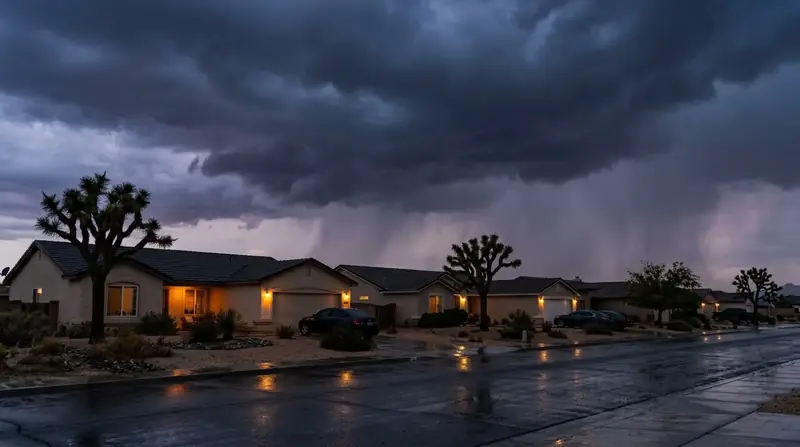
Can you stay in your house during water damage restoration?
Often yes, if the leak was clean water and only a few rooms are affected. It's harder when the kitchen or only bathroom is out, or when the water was dirty.
Drying machines are loud and run day and night. Rooms can get warm and dry. Some families stay and close off the wet rooms. Others leave for a few nights.
Plan to leave, at least for a time, if:
- sewage or floodwater got into living areas
- mold is being removed behind plastic containment
- you have no working kitchen, toilet or shower
- someone at home has asthma or a weak immune system and the company advises it
Ask the company you're connected with what it recommends for your home.
Who pays for a hotel if you have to leave?
Your homeowners policy may, through its loss of use coverage. That part of the policy is also called additional living expenses, or ALE. It depends on your policy and on the damage being covered.
The California Department of Insurance says that if your home is not safe to live in, keep receipts for relocation costs. Its claims guide lists housing, food and extra travel to work or school as examples. You must account for those costs, and any advance counts toward your final settlement.
Call your insurer before you book a long stay. Ask what is covered, the daily limits and what receipts it needs. Our guide to water damage insurance claims in California covers the rest of the claim.
Your dehumidifier still fills up every day two weeks later. Is that normal?
Not usually. A dehumidifier that keeps filling after two weeks may mean water is still getting in, or a hidden area is still wet.
Check these first:
- Is the leak truly fixed? A slow drip can keep feeding the area.
- Were the hidden spots checked, such as under cabinets, inside walls or under the subfloor?
- Are windows or doors open to outside air?
Ask the company for fresh readings in the wet areas and a dry room. If readings aren't dropping, ask why and what will change.
Is the restoration company stretching the drying time?
Look at the readings, not the days. If readings stop changing for days while machines keep running, ask questions.
Drying equipment is commonly billed by the day. So each extra day costs money. Your insurer may also ask why the machines ran as long as they did. Daily readings are the answer to both.
Signs worth asking about:
- No daily readings, or readings you aren't allowed to see
- Readings that have matched the dry room for days, but the machines stay
- More machines than the wet area seems to need, with no reason given
A drying log is the daily record of readings and machines. Our page on how a call through this site works explains why we tell callers to ask for one.
Should you buy your own dehumidifier after the crew leaves?
You usually don't need one if final readings showed the house was dry. If you want extra peace of mind, a small home unit is a low-risk choice.
Keep the final readings in your records. If a musty smell or new stain shows up later, call the company back. A home dehumidifier can't fix water that is still trapped inside a wall.
Need drying started in Lancaster?
The fastest way to shorten the job is to start drying early. Shut off the water, then call (661) 592-2877 to be connected with a restoration company that serves your area. Calls are answered 24 hours a day, 7 days a week.
Ask the company for a rough drying plan and daily readings in writing. See emergency water removal for what happens on the first visit.
Lancaster Water Damage Restoration is a free referral service, not a contractor. When you call, you're connected with an independent restoration company that serves your area. Your call may first be answered by a screening call center. That company gives you its own estimate, contract and license details. Check them before you sign anything.
This page covers how long each stage takes in Lancaster, CA, and what speeds it up or slows it down. It also covers staying at home and who may pay if you can't.
Water in your Lancaster home right now?
Shut off the main water valve, then call. You will be connected with an independent restoration company that serves your area.
Free call · referral service, not a contractor