
Lancaster, CA
How to Prevent Frozen Pipes in Lancaster, CA
Lancaster's winter nights drop below freezing far more often than most people expect. A few cheap steps in October and November protect the pipes most likely to split.
- Free callYou pay this site nothing
- Line open 24/7Calls answered day and night
- No obligationGet an estimate, then decide
- Lancaster, CAZIP 93534 · 93535 · 93536
- License check guideHow to look up a CSLB license
Free referral service, not a contractor. You are connected with an independent restoration company. How this works
How cold does it get in Lancaster in winter?
Cold enough to freeze pipes on many nights. Lancaster averages about 61 nights at or below 32°F between November and February.
Those numbers come from NOAA's 1991–2020 climate normals for the Fox Field weather station. December is the coldest month, with about 20 freezing nights. January has about 18, and November and February each have about 12.
Hard freezes happen too. Fox Field recorded lows of 15°F on January 13, 14 and 22, 2025 (NOAA daily records). Those were the coldest nights there since December 2020.
The high desert is dry and sunny, so days often warm up fast. So a pipe that split overnight may not leak until it thaws later in the morning.
Which pipes freeze first?
Pipes in places the house heat doesn't reach. Outdoor pipes and pipes along outside walls are the usual trouble spots.
Check these before November:
- hose bibs (outdoor faucets) and the pipe just behind them
- pipes in the garage, attic or crawl space
- pipes inside outside walls, such as under a kitchen sink on an exterior wall
- the water line to an evaporative (swamp) cooler on the roof
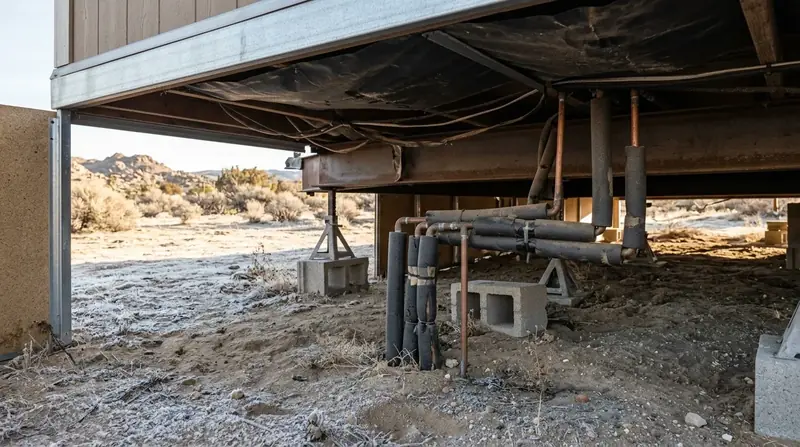
- supply lines under a mobile or manufactured home
- irrigation and backflow pipes above ground
What should you do before freeze season starts?
Insulate exposed pipes, shut off and drain outdoor lines, and find your main valve. October is a good month to do it.
- Insulate exposed pipes. Use foam pipe sleeves or pipe wrap on pipes in the garage, attic and crawl space, and near outside walls.
- Seal drafts. Close gaps where cold air gets in near pipes, such as holes where pipes pass through walls.
- Disconnect garden hoses. A hose left on a hose bib traps water in the faucet.
- Shut off and drain outdoor faucets if you have an indoor shutoff valve for them. Open the outdoor faucet to let the water out, and leave it open.
- Shut off the swamp cooler water line for the winter, and drain it.
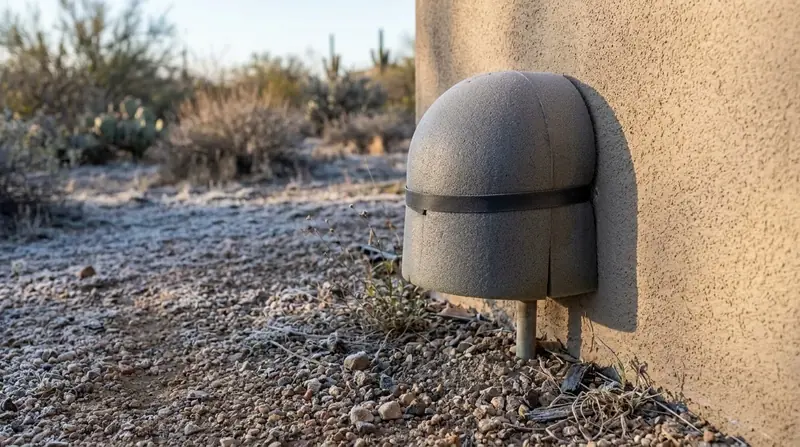
- Cover hose bibs. A foam insulating cover adds protection to an outdoor faucet.
- Find your main water shutoff valve. Make sure it turns. It's usually where the line enters the house, often near the front hose bib or in the garage.
Steps 1 to 5 follow winter tips from the Palmdale Water District, which serves part of the Antelope Valley (2014 press release).
Is an automatic water shutoff valve worth it?
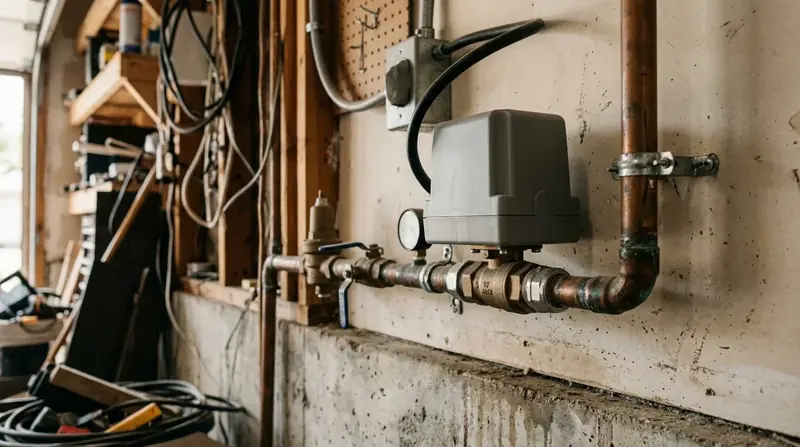
It can be, especially if you travel in winter. An automatic water shutoff valve closes the main by itself when it senses a leak or unusual flow.
Some insurers may ask for one after a water claim. A Lancaster homeowner on Reddit said their insurer required one to renew after a slab leak. Our slab leak water damage page covers that question. A plumber can install a valve and tell you what fits your main line.
What should you do on a freezing night?
Keep warm air around the pipes and keep a little water moving. These steps matter most on the coldest nights.
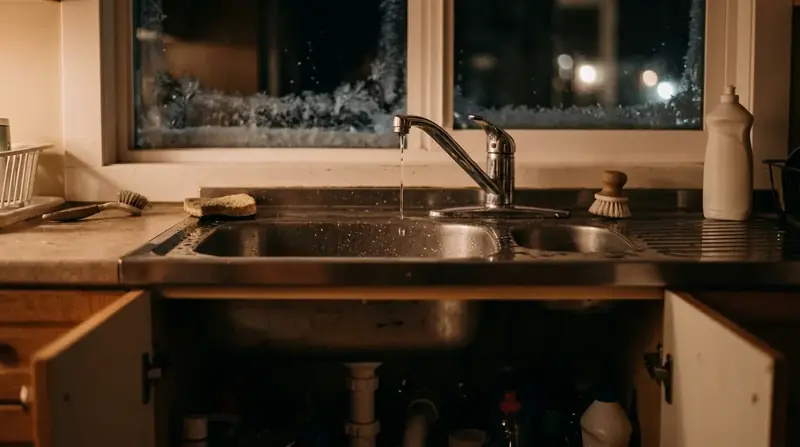
- Let a faucet drip. Leave a trickle of hot and cold water running overnight. A faucet on an outside wall is the best choice.
- Keep the heat steady. Set the thermostat to the same temperature day and night, rather than turning it down at bedtime.
- Open cabinet doors under sinks on outside walls, so room heat reaches the pipes.
- Keep the garage door closed if water lines run through the garage.
- Leave the heat on if you go away. The American Red Cross says to set it no lower than 55°F.
The first three tips come from the Palmdale Water District. The American Red Cross gives the same advice on dripping faucets, steady heat and open cabinets, and adds the garage door tip.
Is heat tape safe for pipes?
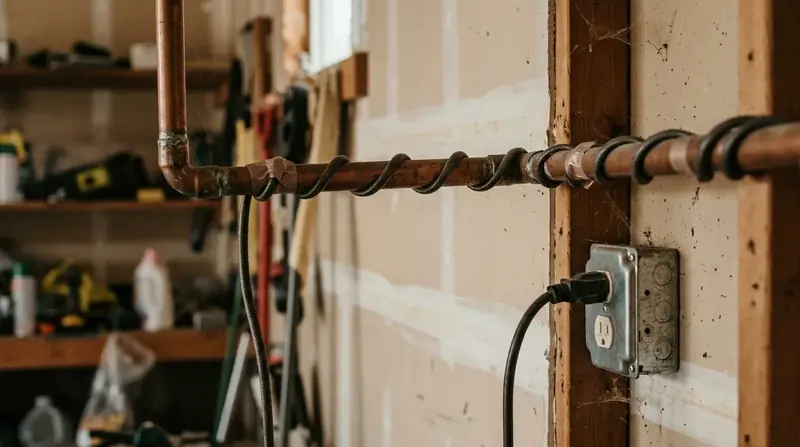
It can be, if it is the right kind and installed by the instructions. Old or badly installed heat tape has caused house fires.
The U.S. Consumer Product Safety Commission has warned about heat tape fires since at least 1989. More than half of the fires it counted were in mobile homes and trailers. Its safety tips say to:
- follow the maker's instructions
- put the tape right on the pipe, not on top of pipe insulation
- don't cover the tape with insulation unless the maker allows it, and then use a type that won't burn, such as fiberglass, not foam
- never wrap the tape over itself unless the instructions allow it
- plug it into a grounded, ground-fault protected outlet
- check it every fall, and replace it if you see charring, cracks or bare wire
The Red Cross says to choose UL-listed heat tape. If you aren't sure the heat tape is installed right, ask an electrician to look at it.
What about mobile and manufactured homes?
They need extra care, because the water lines often run under the floor. There, cold air can reach them.
About 3,600 mobile homes sit in ZIP code 93535, east Lancaster and Lake Los Angeles (U.S. Census Bureau, ACS 2020–2024).
Before winter, look under the home with a flashlight:
- Is every supply line wrapped or covered?
- Is the heat tape in good shape and plugged in?
- Are there gaps in the skirting that let wind under the home?
A burst under a mobile home can soak the floor from below before you see water inside. For more on that area, see water damage help in east Lancaster and Lake Los Angeles.
What if the power goes out during a cold snap?
Keep a faucet dripping and keep cabinet doors open. If the house will be cold for a long time, shut off the main and drain the lines.
Southern California Edison has listed Lancaster among areas it may consider for Public Safety Power Shutoffs during high winds (CBS Los Angeles, 2018).
To drain the lines, close the main water shutoff valve. Then open the faucet at the lowest point of the house, and a faucet on the top floor if you have one. This lets the water left in the pipes run out.
How do you thaw a frozen pipe safely?
Leave the faucet open and warm the pipe slowly. Never use an open flame.
- Leave the faucet turned on. Moving water helps melt the ice, and it gives the water somewhere to go.
- Warm the pipe with a hair dryer. Start closest to the faucet and work back toward the frozen spot.
- Other safe heat sources: an electric heating pad or towels soaked in warm water.
- Never use a torch, kerosene heater or other open flame. It can start a fire inside the wall.
- Keep going until full water pressure comes back.
These steps follow the Palmdale Water District's winter tips and the American Red Cross. If you can't find the frozen spot, or can't reach it, call a plumber.
The Red Cross also says to check your other faucets. If one pipe freezes, others may too.
A frozen pipe has not always burst. But check for leaks once the water flows again, since the split may only show up after the ice melts.
What if a pipe already burst?
Shut off the main water valve right away, then get the water out. Our burst pipe water damage page covers what to do next, who fixes what, and what insurance usually asks after a freeze.
If water is spreading and you want help with the cleanup, call (661) 592-2877. You'll be connected with a restoration company that serves your area.
Lancaster Water Damage Restoration is a free referral service, not a contractor. When you call, you're connected with an independent restoration company that serves your area. Your call may first be answered by a screening call center. That company gives you its own estimate, contract and license details. Check them before you sign anything.
This guide covers what to do before the cold, what to do on a freezing night, and how to thaw a pipe safely. If a pipe has already burst, shut off the main water valve and call (661) 592-2877. Calls are answered 24 hours a day, 7 days a week.
Water in your Lancaster home right now?
Shut off the main water valve, then call. You will be connected with an independent restoration company that serves your area.
Free call · referral service, not a contractor