
Lancaster, CA
The Water Damage Restoration Process, Step by Step
Water damage restoration is the full job of getting a wet house back to normal. It has two parts. First the water comes out and the building is dried. Then the damaged parts are repaired.
- Free callYou pay this site nothing
- Line open 24/7Calls answered day and night
- No obligationGet an estimate, then decide
- Lancaster, CAZIP 93534 · 93535 · 93536
- License check guideHow to look up a CSLB license
Free referral service, not a contractor. You are connected with an independent restoration company. How this works
What is water damage restoration?
Water damage restoration means drying a home after a leak or flood and then fixing what the water ruined. It covers everything from pumping out water to putting new drywall and flooring back in.
A full job often includes:
- an inspection to find the source and every wet area
- water extraction, which means pumping and vacuuming water out
- removing materials that can't be saved, such as soaked carpet pad
- structural drying of walls, floors and framing
- cleaning, and disinfecting if the water was dirty
- repairs, also called the rebuild
Not every job needs every step. A small clean leak may only need drying. A sewer backup needs much more.
What is water mitigation, and how is it different from restoration?
Water mitigation means stopping the damage from getting worse. It is the first half of the job: water removal, tear-out of ruined materials and drying.
Restoration, in the narrow sense, is the second half. It is the rebuild that puts the house back together. People also use "restoration" for the whole job, mitigation included.
Mitigation always comes first. New drywall or flooring over wet framing can trap water and lead to mold. That is why repairs wait until the drying is proven.
The two halves are often billed separately. They may even be done by different companies. Our water damage repair page covers the rebuild half.
Is water damage remediation the same thing?
Usually, yes. People say "water damage remediation" for the same cleanup and drying work as mitigation. The remediation steps are the steps listed below.
In industry standards, "remediation" is used most for mold. The IICRC standard for mold work is called S520. Our mold remediation page explains it.
What are the steps of water damage restoration, in order?
The usual order is inspect, remove water, tear out, dry, clean, then rebuild. Each step depends on the one before it.
- Stop the source. A plumber or the homeowner shuts off the water and fixes the leak.
- Inspect and document. The crew finds every wet area and takes photos.
- Remove the water. Pumps and extraction tools pull standing water out of floors and carpet.
- Tear out what can't be saved. This may be carpet pad, baseboards or the lower part of a wall.
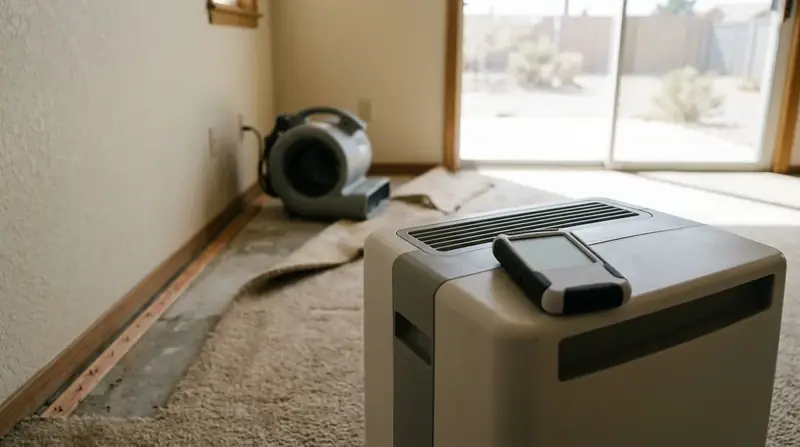
- Dry the structure. Dehumidifiers and air movers run while readings are taken each day.
- Clean and disinfect. This matters most when the water was gray or contaminated.
- Confirm it's dry. Final readings show the materials are back to normal.
- Rebuild. New drywall, paint, flooring and trim go in.
Steps 2 to 7 are mitigation. Step 8 is the reconstruction. Our emergency water removal page covers steps 3 to 5 in more detail.
Water still spreading? Call (661) 592-2877.
What are Category 1, 2 and 3 water, and why do they matter?
The category tells you how dirty the water is. It decides what can be saved, what protective gear the crew wears, and whether things must be thrown out.
The categories come from the IICRC S500. That is the water damage standard published by the IICRC, a nonprofit that certifies restoration technicians and writes industry standards. The current edition is ANSI/IICRC S500-2021.
- Category 1: clean water, such as a broken supply line.
- Category 2: gray water, such as washing machine or dishwasher discharge.
- Category 3: grossly contaminated water, such as sewage or floodwater.
Clean water can turn dirty if it sits. It can also pick up dirt as it moves through a building. So the category is checked again during the job, not only at the start.
Category 3 changes the whole plan. Soaked carpet, pad and drywall are usually removed rather than dried. See sewage cleanup for what that job involves.
What are water damage classes?
A class describes how much water there is and how hard it will be to dry. Guides based on the S500 use four classes. Class 1 is the smallest, with the least water. Class 4 is "specialty drying" for materials that dry slowly.
The class helps a crew decide how much drying equipment to bring. It is a different scale from the category.
What is moisture mapping, and what is a drying log?
Moisture mapping means finding and marking every wet spot, so nothing hidden gets missed. A drying log is the daily record of readings that shows the drying is working.
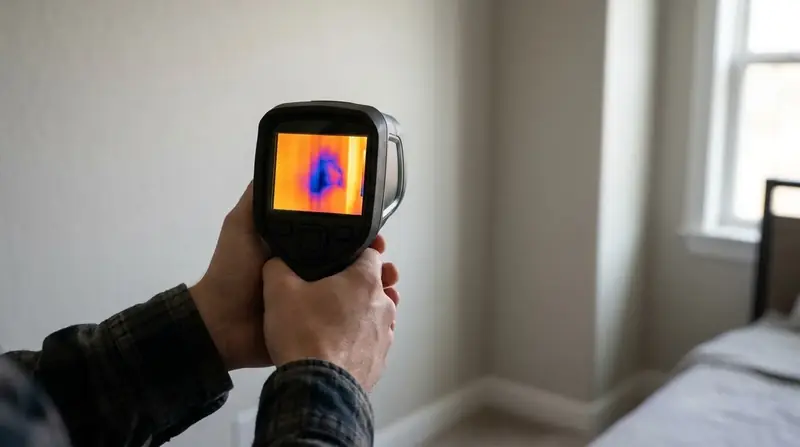
To map moisture, crews use a moisture meter. It measures how wet a wall, floor or piece of wood is. Many also use a thermal camera. It shows cool spots on walls and floors that may be wet, which the meter then checks.
The map is often a sketch or photo of each room with readings marked on it. It shows where the water spread, which is often farther than the stain you can see.
A good drying log lists:
- where each reading was taken
- each day's readings at the same spots
- the air temperature and humidity in each room
- which machines ran, and the day each one came out
Ask for a copy. Your insurer may ask for it too. Our page on how a call through this site works explains why we tell callers to ask for drying logs.
How does structural drying work?
Structural drying pulls water out of the building itself, not just the surface. Air movers blow over wet materials, and dehumidifiers take the water back out of the air.
An air mover is a strong, low fan made to push air across floors and walls. Moving air helps water leave the material and turn into vapor. A dehumidifier then catches that vapor and drains it away.
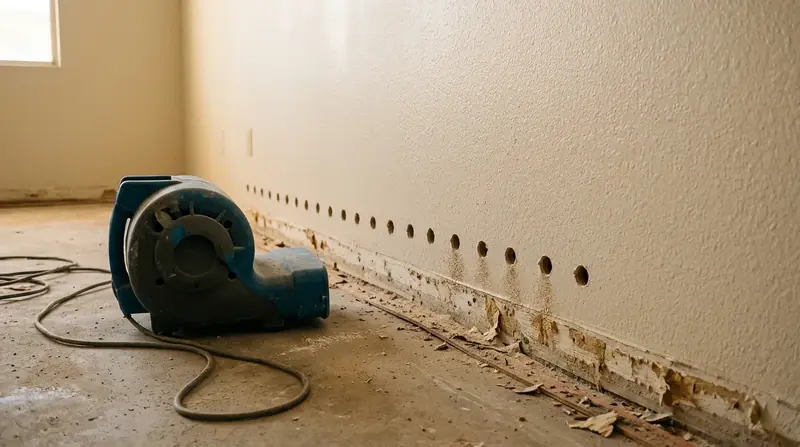
Crews may also pull off baseboards or drill small holes low in a wall. That lets dry air reach the wall cavity behind the drywall.
What is psychrometry?
Psychrometry is the science of air and the water vapor in it. Drying crews use it to balance the machines with the amount of water in the room.
A thermo-hygrometer is the tool that measures air temperature and humidity. Readings taken inside, outside and in a dry room show whether the equipment is pulling water out fast enough. If not, the crew can add, move or change machines.
Does Lancaster's dry air do the work?
It helps on open surfaces, but it doesn't replace drying equipment. Water trapped inside walls or under flooring still needs machines. Our page on how long water damage restoration takes explains what Lancaster's desert air changes.
What is containment, and when is it used?
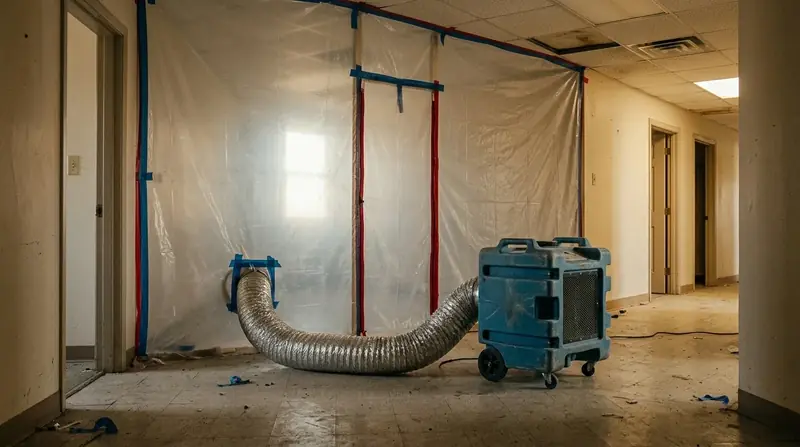
Containment means closing off the work area with plastic sheeting. It keeps mold spores, dust or sewage residue from spreading into the rest of the house.
The EPA's mold remediation guide says containment limits the release of mold into the air and the rest of the building. It also says to keep the contained area under negative pressure. That means a fan exhausts air outdoors, so air flows into the work area, not out of it.
Containment is common on mold and sewage jobs. A clean water leak caught early often doesn't need it. Crews may also use plastic to make a smaller "drying chamber," so the machines work on one area. See mold remediation for how containment fits into a mold job.
How do you know when drying is finished?
Drying is finished when readings in the wet areas match readings from the same kind of material in a dry part of the house. It should not end on a set number of days.
Restoration equipment makers describe it this way. The crew takes readings from dry, unaffected drywall, wood or flooring of the same type. That is the "dry standard." Wet areas are dried until their readings come back to it.
Each material gets its own dry reference. Drywall and wood read differently, so one is never compared to the other. We don't list target numbers here. The right number depends on the material, the meter and the home.
Ask to see the final readings before the rebuild starts. Keep a copy with your records.
Can water damage be fully restored, or is it permanent?
Most water damage can be restored if drying starts fast and the water was clean. Damage from dirty water, or from water that sat for days, is more likely to mean replacement.
The EPA advises drying water-damaged areas and items within 24 to 48 hours to prevent mold growth. The longer materials stay wet, the more of them usually have to come out instead of being dried.
Some things are usually replaced even after clean-water damage. A water damage table in the EPA's mold remediation guide says to discard and replace wet ceiling tiles and wet fiberglass or cellulose insulation. Other materials depend on how wet they got. The water damage repair page covers what can be saved, material by material.
How long does each step take?
Drying usually takes days, not hours, and the rebuild comes after. The full answer, including how Lancaster's freezes, heat and power shutoffs change it, is in how long water damage restoration takes.
Can you do any of this yourself?
A small clean-water spill on a hard floor, yes. Soaked carpet pad, wet walls, water under flooring or any dirty water usually need professional tools. Our guide on whether you can dry water damage yourself has the decision rules.
Water in your Lancaster home right now?
Shut off the main water valve first. Then call (661) 592-2877 to be connected with a restoration company that serves your area. Calls are answered 24 hours a day, 7 days a week.
Ask the company to walk you through its steps, and ask for daily readings in writing.
Lancaster Water Damage Restoration is a free referral service, not a contractor. When you call, you're connected with an independent restoration company that serves your area. Your call may first be answered by a screening call center. That company gives you its own estimate, contract and license details. Check them before you sign anything.
This page explains each step in order, so you know what a crew is doing and why. It describes what restoration companies commonly do. The company you're connected with sets its own methods.
Water in your Lancaster home right now?
Shut off the main water valve, then call. You will be connected with an independent restoration company that serves your area.
Free call · referral service, not a contractor