
Lancaster, CA
Signs of Hidden Water Damage and Mold in Your Home
Hidden water damage usually shows up as a smell, a stain, a floor that changes shape or a bill that doesn't add up. In Lancaster, CA, the cause is usually water trapped inside the house, not humid air. This guide shows what each sign can mean and what to check next.
- Free callYou pay this site nothing
- Line open 24/7Calls answered day and night
- No obligationGet an estimate, then decide
- Lancaster, CAZIP 93534 · 93535 · 93536
- License check guideHow to look up a CSLB license
Free referral service, not a contractor. You are connected with an independent restoration company. How this works
There's a musty smell but no visible water. Where is it coming from?
Often from mold growing where you can't see it. The EPA says you may suspect hidden mold if a building smells moldy but you can't see the source.
The EPA lists places where hidden mold grows:
- the back side of drywall, wallpaper or paneling
- the top side of ceiling tiles
- the underside of carpet and carpet pad
- inside walls around leaking or sweating pipes
- walls behind furniture, where condensation forms
- inside ductwork
- roof materials above the ceiling, after a roof leak
Check the easy spots first. Look under sinks, around the toilet base, in the water heater closet, behind the washer and near the AC drain line. Open cabinet doors and smell inside.
Don't tear into walls to find it. The EPA warns that disturbing hidden mold can release a lot of spores. Peeling back wallpaper is one example it gives. It recommends an experienced professional when you suspect hidden mold.
Is it a water stain or mold?
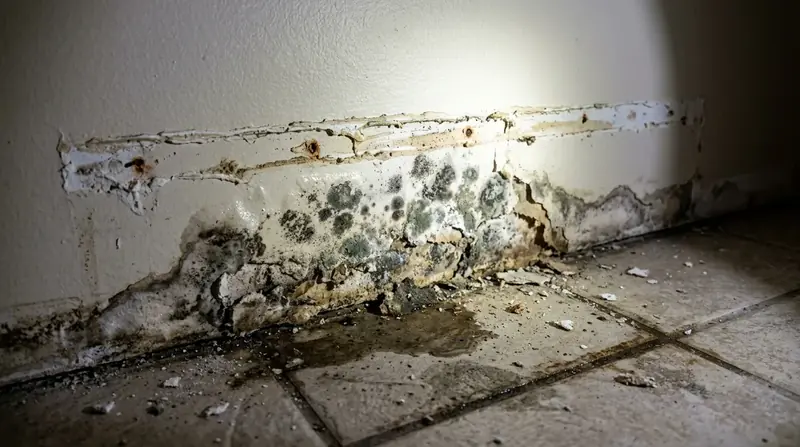
You can't always tell by looking. A plain water stain is usually flat, with a darker ring where the water dried. Mold is more often fuzzy or spotty and may smell musty.
Either way, water got there. The real question is whether the spot is still wet.
What to check:
- Is it growing? A stain that gets bigger usually means the leak is still active.
- Is it soft? Press gently with a finger. Soft or crumbly drywall has been wet for a while.
- Does it smell? A musty smell near the spot suggests mold.
- Is it wet? A moisture meter can tell you. A moisture meter is a handheld tool that measures how wet a material is.
Don't paint over a stain until the leak is fixed and the spot is dry. The EPA says paint over moldy surfaces tends to peel. Our mold remediation page covers testing and cleanup.
How do you know if a ceiling leak is serious?
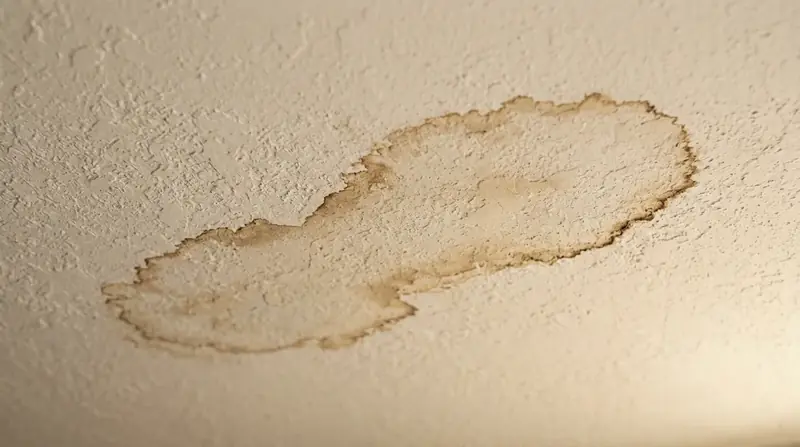
It's serious if the stain keeps growing, the drywall sags or drips, or it's near a light fixture. A sagging ceiling can hold water and fall, so keep people out from under it.
Turn off the power to a light in a wet ceiling at the breaker, if you can reach the panel safely. Then put a bucket under any drip.
In Lancaster, check the AC first in summer. The city averages about 36 days a year at or above 100°F (NOAA 1991–2020 normals, Fox Field). A blocked AC condensate line can overflow into the ceiling below it. See water heater and appliance leaks for AC and attic water heater leaks.
Other sources include the roof after a storm and the unit upstairs. For how a ceiling is dried and fixed, see water damage repair. If the water came from a neighbor, see who pays for water damage.
Why is the water bill high, or a spot on the floor warm?
Both can point to a leak you can't see, sometimes in a pipe under the concrete slab. A warm spot often means the leak is in a hot water line.
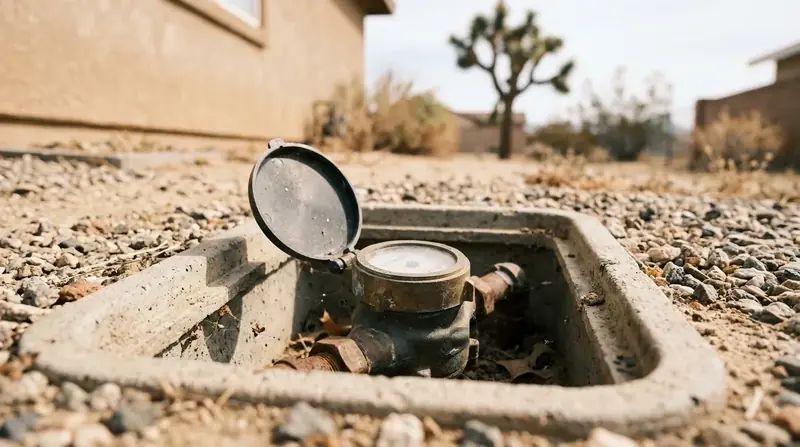
You can check for a hidden leak with your water meter. The EPA's WaterSense program suggests reading the meter before and after a two-hour period when no water is used. If the reading changes at all, you probably have a leak.
A running toilet can move the meter too, so test it first. The EPA suggests a few drops of food coloring in the toilet tank. If color shows up in the bowl after 10 minutes, the tank is leaking. Flush right after so the dye doesn't stain.
Leaks add up. The EPA says the average household's leaks can waste more than 9,300 gallons of water a year.
If the toilet passes and the meter still moves, call a plumber to find the leak. Our slab leak water damage page explains how slab leaks are found and fixed.
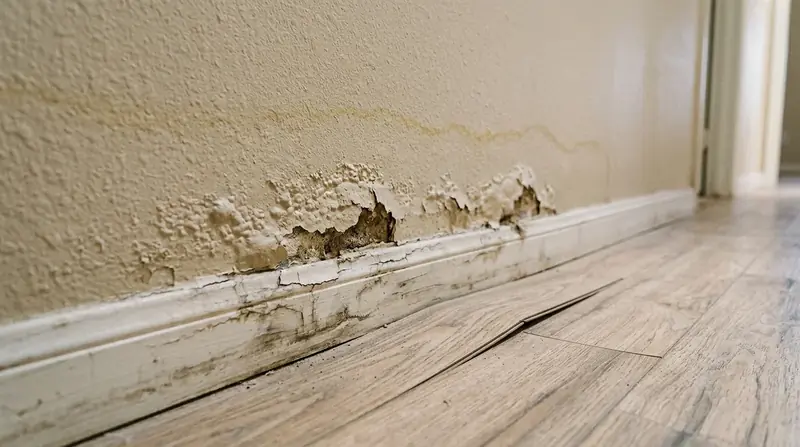
What do warped, buckled or soft floors mean?
They usually mean water got into or under the flooring. Wood and laminate swell when they soak up water, from a spill above or a leak below.
Look for edges that lift, boards that cup, tile that sounds hollow or a soft spot when you step. Check near toilets, tubs, dishwashers, washers and the water heater.
On a slab floor with no leak above, a wet or lifted patch can mean a slab leak. Water also hides under laminate and vinyl, where it can't dry well. Our page on water heater and appliance leaks covers dishwasher and washer leaks.
Is peeling or bubbling paint a sign of water damage?
Often, yes. Water behind paint can push it off the wall in bubbles or blisters.
It shows up most often low on walls near baseboards, around tubs and showers, and under windows. Press the spot gently. If the drywall behind it is soft, it has likely been wet for a while.
Bubbling paint on an outside wall can also come from rain getting in. Check the window or wall above it after the next storm.
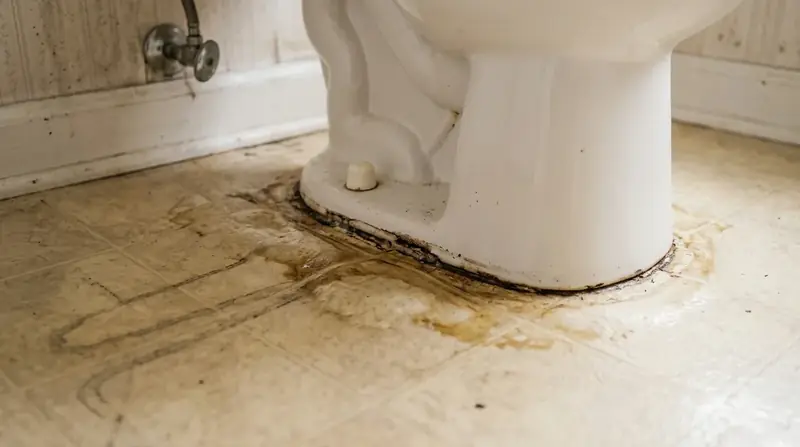
Your toilet has leaked on and off for months. Is there mold under it?
There may be. A slow leak at the base can soak the floor and the wood under it, and mold can grow out of sight. The EPA says wet materials should be dried within 24 to 48 hours to prevent mold growth.
Signs of a long-running toilet leak:
- stains or dark spots on the floor around the base
- a toilet that rocks when you sit on it
- a soft floor near the toilet
- a musty smell in the bathroom
The food coloring test only checks the tank. It won't show a leak at the base. A plumber can reseal or reset the toilet, and a moisture meter can show how far the water spread.
A leak that ran for months is often treated as gradual damage, which policies usually don't cover. It depends on your policy. See water damage insurance claims in California.
Is it water damage, and how bad is it?
Measure, don't guess. A moisture meter shows whether materials are still wet, and how far the wet area reaches.
Signs the damage may be lasting:
- drywall that sags, crumbles or stays soft after drying
- particleboard cabinets that swelled
- floors that stay lifted or cupped after drying
- mold growing on the material
Some materials can be dried and kept, and some can't. Our water damage repair page explains what can usually be saved. For what you can dry on your own, see can you dry water damage yourself?
You found a sign. What should you do next?
Find and stop the water first. Then document it and get the area dried within a day or two.
- Stop the source. Close the fixture's shutoff valve or the main water valve. See what to do after water damage.
- Take photos of the stain, floor or wall, and the date.
- Check how wet it is with a moisture meter, or have someone check.
- Dry it fast. The EPA advises drying within 24 to 48 hours to prevent mold growth.
- Leave suspected mold alone. Don't cut, scrub or sand it yourself.
- If you rent, tell your landlord in writing and keep a copy.
Lancaster Water Damage Restoration is a free referral service, not a contractor. When you call, you're connected with an independent restoration company that serves your area. That company sets its own prices. Calling doesn't commit you to anything.

Water in your Lancaster home right now?
Shut off the main water valve, then call. You will be connected with an independent restoration company that serves your area.
Free call · referral service, not a contractor