
Water damage service · Lancaster, CA
Mold Remediation in Lancaster, CA
Mold after water damage means something stayed wet too long. The fix is to clean up or remove the moldy material and fix the moisture source. Call (661) 592-2877 to be connected with an independent restoration company that serves your area.
- Free callYou pay this site nothing
- Line open 24/7Calls answered day and night
- No obligationGet an estimate, then decide
- Lancaster, CAZIP 93534 · 93535 · 93536
- License check guideHow to look up a CSLB license
Free referral service, not a contractor. You are connected with an independent restoration company. How this works
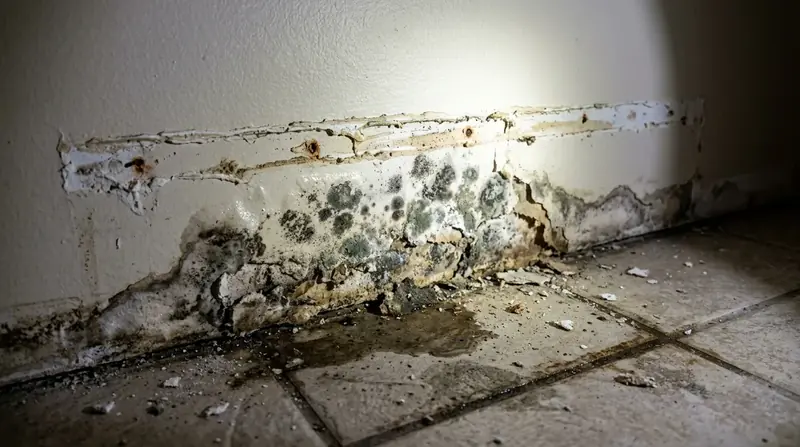
There's a strong musty odor after a leak. Should you leave the house?
That depends on who lives there and how much mold there is. Keep away from the moldy area and don't stir it up. People with asthma, mold allergies, lung disease or a weak immune system should be more careful.
The CDC says damp and moldy places may cause health effects for some people, or none at all. Symptoms it lists include a stuffy nose, sore throat, coughing or wheezing, burning eyes or a skin rash. It says people with asthma or mold allergies may have severe reactions. People with a weak immune system or long-term lung disease may get lung infections from mold.
What to do now:
- Close the door to the room if you can.
- Don't run the heating or AC if you think the ducts or unit have mold. The EPA says that can spread it through the house.
- Don't scrub, sand or cut moldy drywall yourself yet.
- Find and stop the water source.
If anyone feels sick, talk to a doctor. This page is not medical advice.
Smell mold after a leak? Call (661) 592-2877.
How fast does mold grow after water damage?
Fast enough that the first two days matter. The EPA says to dry water-damaged areas and items within 24 to 48 hours to prevent mold growth.
After that window, mold may start on wet drywall, carpet pad, wood and insulation. You may not see it at first. It often grows behind baseboards, under flooring or inside walls.
A neighbor's leak works the same way. If water came through a shared wall or ceiling, the clock started when the water arrived, not when you noticed it.
Mushrooms growing through a ceiling or floor are a late sign. They usually mean wood has stayed wet for a long time. That needs a closer look at the framing, not just cleanup.
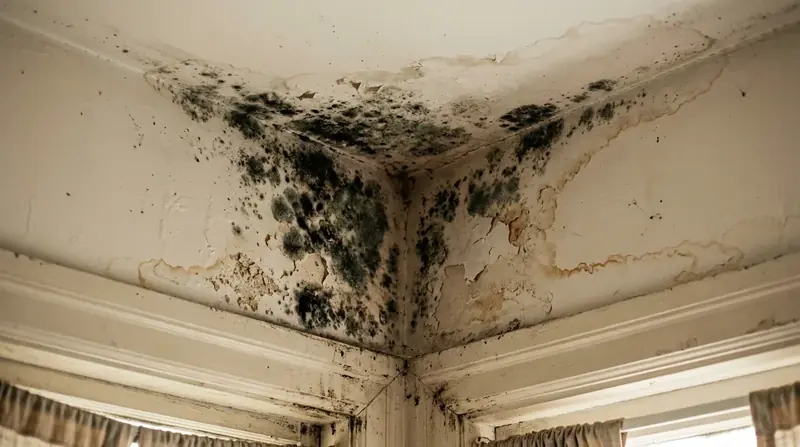
Why does mold grow in a dry desert town like Lancaster?
Because mold here comes from trapped water, not from humid air. Lancaster gets about 6.8 inches of rain a year (NOAA 1991–2020 normals, Fox Field).
Some restoration websites blame humid weather for mold in the Antelope Valley. That isn't what drives it here. The high desert air is dry, and it can help dry surfaces you can see.
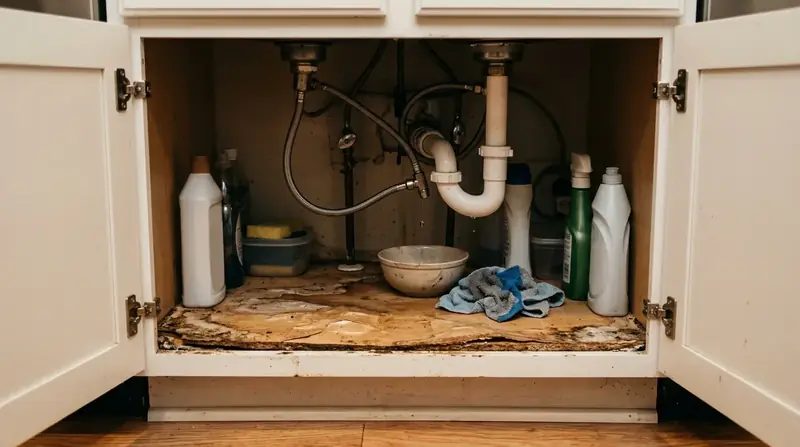
The trouble is water you can't see. A slow leak inside a wall, under a slab or behind a cabinet keeps the materials wet. Dry outside air doesn't reach it. Common sources here include:
- slab leaks under the floor
- water heater and appliance leaks, including AC condensate lines in summer
- burst pipes that were not fully dried
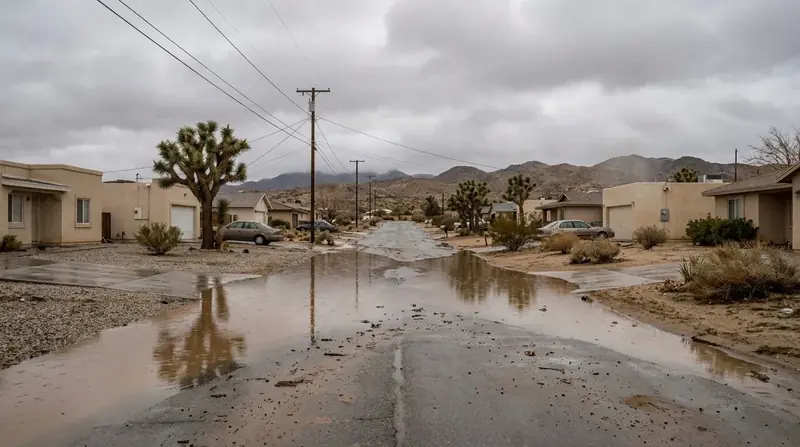
- flood and roof leaks after winter storms
- sewage backups that soaked drywall or carpet
Can you remove mold yourself?
Often yes, if the patch is small and the water was clean. The EPA says that if the moldy area is less than about 10 square feet, you can usually handle the cleanup.
That is about a 3-foot by 3-foot patch. For a small patch on a hard surface:
- Fix the leak first.
- Wear gloves, goggles and an N-95 respirator.
- Scrub hard surfaces with water and detergent, then dry them completely.
- Porous items, like moldy ceiling tiles or carpet, may have to be thrown away.
- Don't paint or caulk over mold. The EPA says paint over mold tends to peel.
The EPA also says using bleach is not a routine practice for mold cleanup. Never mix bleach with ammonia or cleaners that contain it. That makes toxic fumes.
Get help instead if the patch is larger, the mold is inside walls or the heating and AC system, or the water was sewage or floodwater.
What is mold remediation, and how is it different from mold removal?
Remediation means removing the mold, cleaning what can be saved and fixing the moisture problem behind it. "Mold removal" is often used to mean the same thing. No company can remove every mold spore from a home, because spores are normal in outdoor and indoor air.
A typical remediation job goes like this:
- Find the water source and get it fixed.
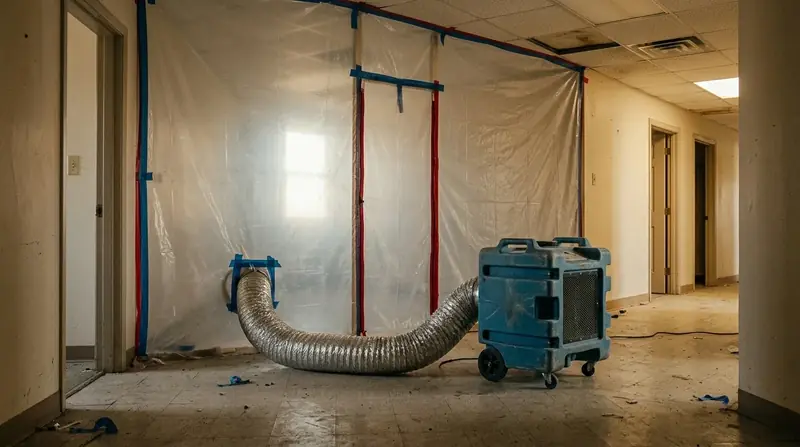
- Set up containment. Plastic sheeting closes off the work area so spores don't spread to clean rooms.
- Filter the air. An air scrubber with a high-efficiency filter runs during the work.
- Remove moldy porous materials, such as drywall, insulation and carpet pad.
- Clean the surfaces left behind. Some companies apply an antimicrobial product. Ask what they use and why.
- Dry the area and confirm it with moisture readings.
- Rebuild with new materials. See water damage repair.
The industry standard for this work is IICRC S520. The IICRC also offers a mold and sewage technician course called AMRT. Ask the company you're connected with which standard it follows and whether its technicians hold AMRT. Check the answer for yourself.
Do you need mold testing first?
Usually not, if you can see or smell the mold. The CDC does not recommend mold testing. It says you don't need to know the type of mold before cleaning it up.
Some companies still offer testing. It may come up when there's a strong musty odor but no visible mold, or as a check after the work. Ask what the test would change before you pay for it. If the same company tests and remediates, ask how it avoids a conflict of interest. Our mold inspection and testing page explains when a test is worth it.
To learn the warning signs of hidden moisture, see signs of hidden water damage and mold.
How much does mold remediation cost?
National figures put the average around $3,500, with most jobs between $1,500 and $9,000 (Fixr, updated August 2025). That works out to about $10 to $30 per square foot.
Fixr lists a bathroom job from about $500 and a whole-house job up to about $30,000. These are national numbers, not Lancaster prices. Your price depends on the size of the area, what must be removed and how much rebuild follows.
Ask for a written estimate before work starts. For more on how restoration bills are built, see the water damage restoration cost guide.
Mold coverage depends on your policy and on what caused the water. Read the mold section of your policy or ask your agent. See water damage insurance claims in California.
You rent and there's mold. What does California law say?
California law can treat dampness and visible mold as a substandard housing condition. This is general information, not legal advice.
Renters are common in central Lancaster. In ZIP code 93534, 62.7% of homes are renter-occupied (U.S. Census Bureau, ACS 2020–2024).
California's Health and Safety Code section 17920.3 lists "dampness of habitable rooms" as a substandard condition. It also lists visible mold growth, as determined by a health officer or code enforcement officer. Minor mold on surfaces that collect moisture, like a shower, is excluded.
The Toxic Mold Protection Act sets disclosure duties for landlords and sellers. The state has not set a safe exposure limit for indoor mold.
If you rent, tell your landlord in writing and keep a copy. Take dated photos. For who pays for damage between landlords, tenants and neighbors, see who pays for water damage. Central Lancaster is covered on water damage help in central Lancaster.
Get help with mold after water damage in Lancaster
Call (661) 592-2877 to be connected with a restoration company that serves your area. Ask how it will find the moisture source and contain the work area. Get a written estimate first.
To see how this site works, read how this works and about us.
Lancaster Water Damage Restoration is a free referral service, not a contractor. When you call, you're connected with an independent restoration company that serves your area. Your call may first be answered by a screening call center. That company gives you its own estimate, contract and license details. Check them before you sign anything.
The call is free. Calls are answered 24 hours a day, 7 days a week.
Water in your Lancaster home right now?
Shut off the main water valve, then call. You will be connected with an independent restoration company that serves your area.
Free call · referral service, not a contractor