
Lancaster, CA
Buying a Home With Water Damage History in Lancaster, CA
A past leak doesn't have to rule a house out. What matters is whether the water was stopped, the house was dried, and the damage was repaired the right way.
- Free callYou pay this site nothing
- Line open 24/7Calls answered day and night
- No obligationGet an estimate, then decide
- Lancaster, CAZIP 93534 · 93535 · 93536
- License check guideHow to look up a CSLB license
Free referral service, not a contractor. You are connected with an independent restoration company. How this works
Should you worry about a home with a past water damage claim?
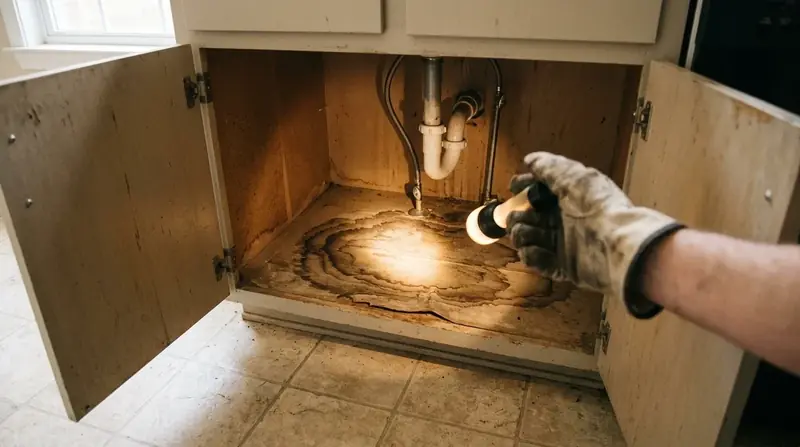
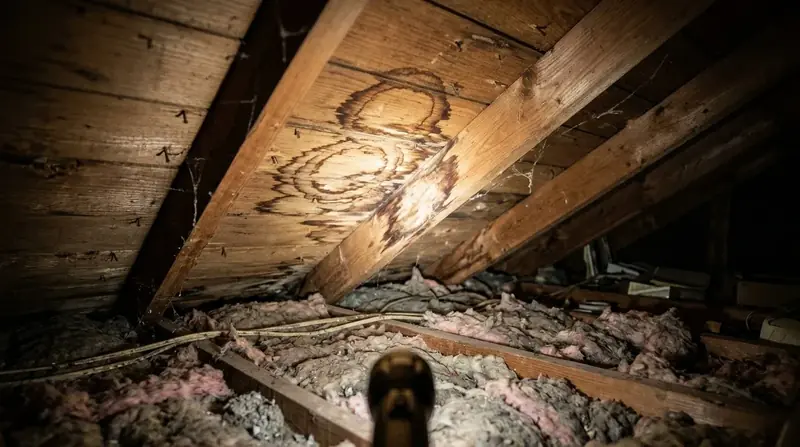
Not always. A leak that was fixed fast and dried fully may leave no lasting problem. A leak that sat for weeks, or was painted over, can leave hidden mold growth.
The California Department of Public Health (CDPH) points to the signs that matter. It says water damage, damp materials, visible mold and mold odor are the things tied to health effects. The number or type of mold spores is not (CDPH statement, updated 2016).
So the useful question is not "was there ever a leak?" It's "is anything still wet, stained, moldy or musty?"
What should you ask the seller?
Ask what happened, who fixed it, and for the paperwork. A seller with nothing to hide can usually answer these.
- What leaked, and when?
- Who fixed the source, such as the pipe, roof or water heater?
- Who dried the house, and are there drying records with moisture readings?
- What was removed and replaced, such as drywall, flooring or cabinets?
- Was there a permit for the repair work?
- Was an insurance claim filed? Can you see the claim paperwork?
- Was mold found? If so, is there a report on the cleanup?
- Will the seller order a CLUE report and share it?
None of these records is required by law in every sale. Ask anyway. Missing paperwork is a reason to look more closely.
What is a CLUE report, and how do you get one?
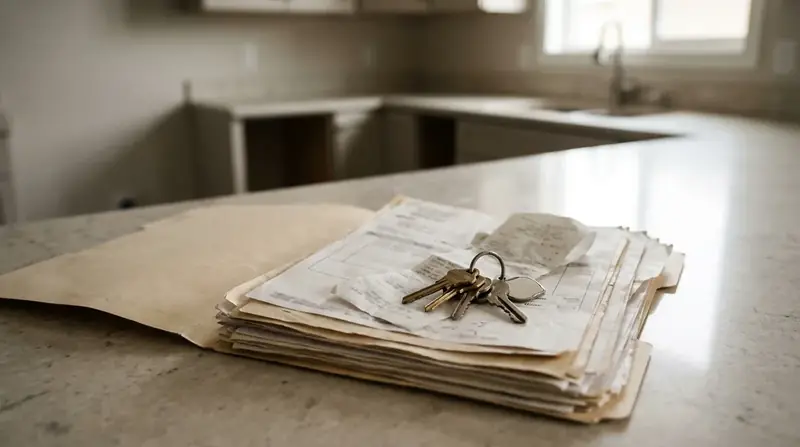
A CLUE report is a history of insurance claims on a home. LexisNexis, a consumer reporting company, produces it. A buyer can't order one, so ask the seller.
CLUE stands for Comprehensive Loss Underwriting Exchange. It holds up to seven years of claims. It can list a loss the owner asked the insurer about, even if the insurer paid nothing (Wisconsin Office of the Commissioner of Insurance, May 2026).
Under federal law, only the property's owner, insurer or lender can order the property report. The owner can get one free copy every 12 months (CFPB, 2025).
A clean report doesn't prove there was never water damage. Claims filed with insurers that don't take part in CLUE won't appear. Verisk runs a second claims database, called A-PLUS, with its own free yearly report (CFPB).
For how a claim gets onto a CLUE report in the first place, see is a water damage claim worth filing.
What does a California seller have to disclose?
Most California home sellers must fill out a Transfer Disclosure Statement (TDS). Some sales are exempt, such as many foreclosure, probate and new-home sales. The TDS asks whether the seller is aware of certain problems, including several tied to water.
The TDS form in California Civil Code section 1102.6 asks the seller about:
- mold and other environmental hazards
- flooding, drainage or grading problems
- major damage from floods, fire, earthquake or landslides
- defects in the roof, foundation or plumbing, sewers or septic system
- repairs or additions made without the needed permits
The TDS does not ask about every past leak or insurance claim. That's why your own questions and the CLUE report matter.
What if the disclosures arrive after your offer?
You may be able to cancel. Under Civil Code section 1102.3, a buyer has 3 days after delivery in person, or 5 days after delivery by mail or electronically, to end the offer in writing.
Does the seller have to disclose flood zones?
Usually, yes, through a separate form called the Natural Hazard Disclosure. Under Civil Code section 1103.2, it says whether the home is in a FEMA high-risk flood zone (Zone A or V). It also says whether the home is in a dam-failure flooding area. To check a flood zone yourself, see Lancaster storm and flood prep.
What about California's mold disclosure law?
It mostly doesn't apply to home sales. The Toxic Mold Protection Act's disclosure rules cover sellers of commercial property and landlords, not home sellers. Those rules also can't take effect until the state sets mold exposure limits.
The state has not set them. In 2005, CDPH told the Legislature that science-based limits for indoor mold could not be set. In 2016 it said that had not changed (CDPH statement, updated 2016). Mold still comes up in a sale, because the TDS asks the seller about it.
Will a past claim on the house affect your insurance?
It may. Insurers can look at claim history when you apply. Get a homeowners insurance quote before your inspection deadline, and ask the agent how the home's history could affect it.
California law limits one thing. Say you once asked an insurer about coverage, and it never became a claim. An insurer can't base a decision to turn you down or charge you more on that question if it learned of it from a claims database (Insurance Code section 791.12).
Most water damage claims depend on whether the damage was sudden or gradual. Our guide to water damage insurance claims in California explains what home policies usually cover.
How do you check permits for past repairs in Lancaster?
Ask the city or county that issued them. Which one depends on where the home is.
For homes inside Lancaster city limits, the City of Lancaster's Building and Safety division handles permits through its online permit portal. Since September 1, 2025, new permits for home reroofs and for heating and AC work go through a separate system called Symbium (City of Lancaster permits page).
The City keeps house plans for only three years after the work is done. For older plans, the City says to file a public records request with the City Clerk to see if they still exist.
Homes in unincorporated areas, such as Quartz Hill and Lake Los Angeles, get permits from LA County Building & Safety instead. Our water damage repair page covers which repairs usually need a permit.
The seller didn't disclose water damage, or the inspector missed it. What are your options?
You may have a claim against the seller, an agent or the inspector, but deadlines apply. Talk to a California real estate attorney soon. This section is general information, not legal advice.
Here is what California law says, in general.
- Seller: a seller who fails a duty under the disclosure law on purpose or through carelessness can be liable for the buyer's actual losses (Civil Code section 1102.13). The sale itself is not canceled just because of that failure.
- Fraud: a claim for fraud generally has a three-year deadline. The clock usually starts when the buyer discovers, or should have discovered, the facts (Code of Civil Procedure section 338).
- Agents: in the sale of a 1–4 unit home, the seller's agent, and an agent working with them to find a buyer, must do a careful visual inspection. They must disclose facts it would reveal that affect the home's value or appeal (Civil Code section 2079). A claim under that rule must be filed within two years of closing, recording or move-in, whichever comes first (Civil Code section 2079.4).
- Home inspector: an inspector must use the care a reasonably careful inspector would use (Business and Professions Code section 7196). A contract can't limit the inspector's liability to the inspection fee (section 7198). A claim must be filed within four years of the inspection date (section 7199).
You can also file a complaint about a real estate agent with the California Department of Real Estate (DRE). The DRE says it can't order refunds or award damages, and it can't act as your lawyer.
What should you do right away?
Stop any active leak and record what you found. Take photos, keep every document from the sale, and write down the dates.
Don't wait on the drying while you sort out who's at fault. The EPA advises drying water-damaged materials within 24 to 48 hours to prevent mold growth.
Found water damage after moving in?
Get it dried first, then sort out the paperwork. Call (661) 592-2877 to be connected with a restoration company that serves your area. Calls are answered 24 hours a day, 7 days a week. Ask for a written estimate and photos you can keep for your records.
Lancaster Water Damage Restoration is a free referral service, not a contractor. When you call, you're connected with an independent restoration company that serves your area. Your call may first be answered by a screening call center. That company gives you its own estimate, contract and license details. Check them before you sign anything.
This guide covers what to ask, what California disclosures say, what an inspection can miss, and what to do if damage shows up after you buy. It is general information, not legal advice.
Water in your Lancaster home right now?
Shut off the main water valve, then call. You will be connected with an independent restoration company that serves your area.
Free call · referral service, not a contractor