
Water damage service · Lancaster, CA
Emergency Water Removal and Water Damage Cleanup in Lancaster, CA
Water on the floor needs to come out fast. The longer it sits, the more it soaks into carpet, drywall and wood. If your Lancaster home has standing water or soaked carpet, call (661) 555-0123. We connect you with an independent restoration company that serves your area.
- Free callYou pay this site nothing
- Line open 24/7Calls answered day and night
- No obligationGet an estimate, then decide
- Lancaster, CAZIP 93534 · 93535 · 93536
- License check guideHow to look up a CSLB license
Free referral service, not a contractor. You are connected with an independent restoration company. How this works
Water is on the floor right now. What should you do first?
Stop the water, stay safe, then take photos. Water removal starts after the source is shut off.
- Shut off the water. Close the main water shutoff valve. It's usually where the water line enters the house, often near the front hose bib or in the garage.
- Stay away from wet outlets and cords. Turn off the breaker for the wet area only if you can reach the panel without standing in water.
- Leave the gas alone unless you smell or hear gas. About 80% of Lancaster households heat with gas (U.S. Census Bureau, ACS 2020–2024). SoCalGas says to shut gas off at the meter only if you smell gas or hear it escaping. Call SoCalGas at 1-800-427-2200 to turn it back on.
- Take photos and video before anything is moved.
- Lift what you can. Move rugs, boxes and furniture off wet floors.
For a full first-hour checklist, see what to do after water damage.
Water still spreading? Call (661) 555-0123.
What is emergency water removal?
Emergency water removal is the first part of water mitigation. Mitigation means stopping the damage: getting the water out and drying the building. Repairs come later.
A typical emergency visit includes:
- finding where the water went, with moisture meters and often a thermal camera
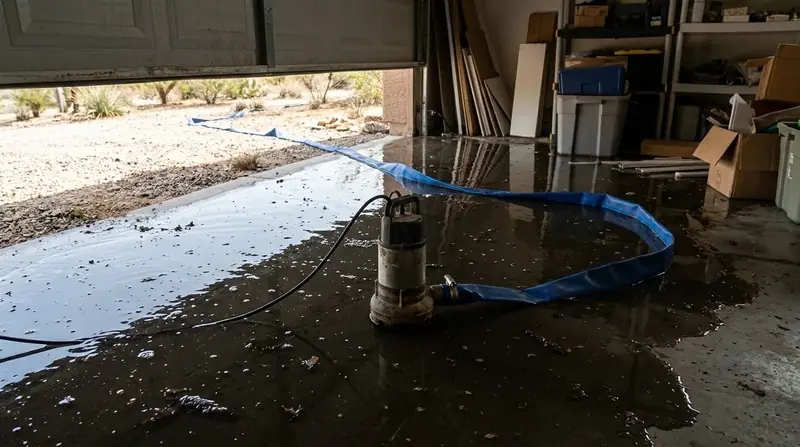
- pumping or vacuuming out the water
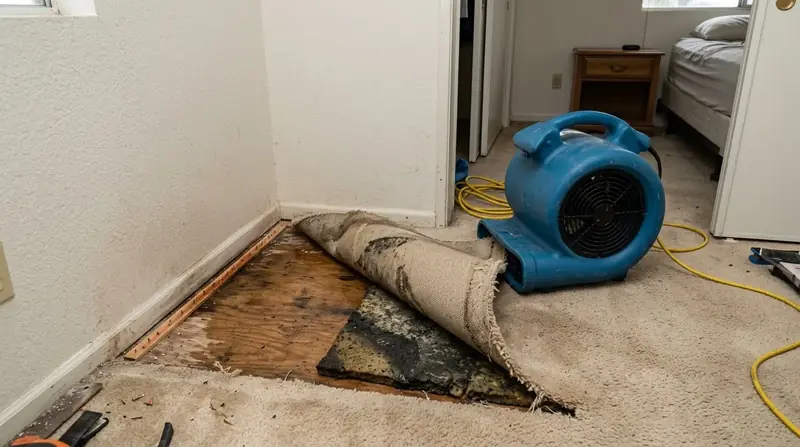
- pulling up soaked carpet pad or other materials that can't be dried
- setting up drying equipment
- taking moisture readings to track drying
Water extraction: how standing water comes out
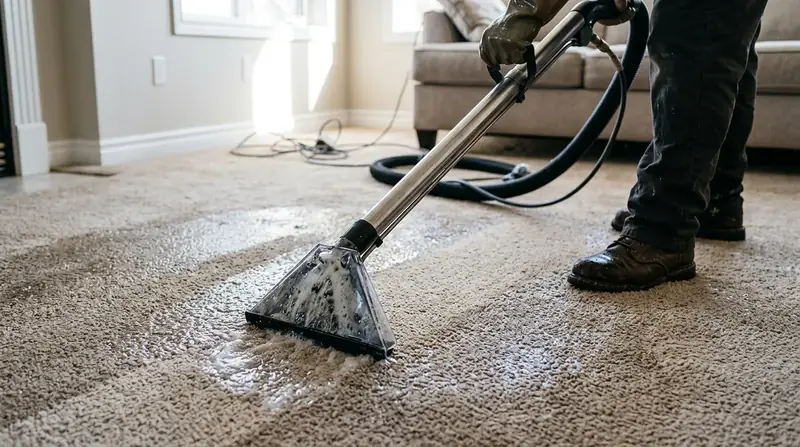
Water extraction means pumping and vacuuming water out of floors, carpet and pad. Crews use strong vacuums with wands or tools that press water out of carpet. Bigger jobs may use a truck-mounted extractor. That is a powerful vacuum built into a truck or van, with hoses run into the house.
Extraction removes far more water than fans can. That is why it comes before drying.
Structural drying after extraction
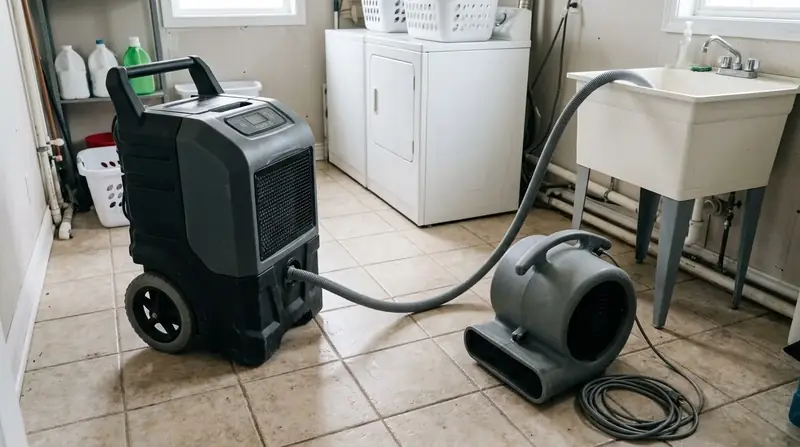
Structural drying is drying the walls, floors and framing, not just the surface. It uses two main machines:
- Dehumidifiers pull water out of the air.
- Air movers are strong fans that blow across wet surfaces.
A moisture meter shows how wet a material is. Ask for readings every day until the materials are dry. Those readings are often kept in a drying log. See how long restoration takes for a realistic timeline.
How do you get rid of standing water safely?
Shut off the source and stay clear of power first. Then a small puddle can go with towels or a wet/dry vacuum. A room or more of water usually needs extraction equipment.
Is the standing water clean or dirty?
The type of water changes what is safe to touch. The IICRC S500 standard sorts water into three categories:
- Category 1: clean water, such as a broken supply line.
- Category 2: gray water, such as washing machine or dishwasher discharge.
- Category 3: grossly contaminated water, such as sewage or floodwater.
(IICRC is the industry body that publishes this cleaning and restoration standard.) Don't wade through Category 3 water. Keep children and pets away from it. See sewage cleanup and flood damage restoration.
When to stop doing it yourself
Call for help if:
- water covers more than one room
- water has reached walls, cabinets or the floor below
- the water came from a toilet, a sewer line or outside
- carpet is soaked all the way through to the pad
Can wet carpet be saved?
Often yes, if the water was clean and the carpet is dried fast. Carpet soaked by sewage or floodwater is normally thrown away.
What actually works to dry soaked carpet
The EPA's mold guide lists three steps for wet carpet and its backing:
- remove the water with a water extraction vacuum
- lower the humidity with a dehumidifier
- speed up drying with fans
A household fan alone rarely gets water out of a soaked pad. The pad sits under the carpet and holds a lot of water. Ask the company you're connected with whether they plan to dry the pad in place or replace it, and why.
Carpet cleaning after drying is a separate step. It matters most when the water was gray or dirty.
How long can carpet stay wet before it is ruined?
The EPA says wet carpet and backing should be dried within 24 to 48 hours. On its flood cleanup page, the EPA adds that things wet for more than two days usually get moldy. So the first two days matter most.
For sewage or floodwater, the timing doesn't help. A CDC flood cleanup fact sheet says to throw away carpet and carpet padding that can't be washed and disinfected.
Carpet soaked right now? Call (661) 555-0123.
How fast does drying need to start?
As soon as the water is out. The EPA advises drying water-damaged materials within 24 to 48 hours to prevent mold growth.
Lancaster's dry desert air helps surfaces dry. It doesn't dry water trapped inside walls, under cabinets or under flooring. That hidden water is where mold tends to start. See mold remediation if you already smell a musty odor.
How do you know the drying is finished?
Drying is finished when moisture readings show the materials are dry. It should not end on a fixed number of days.
A good drying record includes:
- where each reading was taken
- the reading for each day
- which machines ran in each room
- the day each machine was removed
Ask for a copy of these records. Your insurer may ask for them too. Readings that stop changing for days while machines keep running are worth asking about.
What if the power goes out during drying?
Drying stops when the power stops. Dehumidifiers and air movers need power to run.
SCE has listed Lancaster and Palmdale among areas it may consider for Public Safety Power Shutoffs during high wind (CBS News Los Angeles, 2019). If an outage is announced, ask the company you're connected with how they will keep drying on track.
Can you get help at night, on weekends or on holidays?
Calls to (661) 555-0123 are answered 24 hours a day, 7 days a week. When a crew can arrive depends on the restoration company you're connected with.
Ask two things on the call:
- When can someone arrive?
- What should I do until then?
It helps to say where the water came from, which rooms are wet, and whether it is still running. That lets the company plan the right equipment.
We don't promise arrival times, because we don't send the crew ourselves.
What should you sign before work starts?
Ask for a written estimate or scope of work before anyone starts. Read every page you're asked to sign.
- Check the contractor license. In California, a job of $1,000 or more in labor and materials must be done by a contractor licensed with the Contractors State License Board (CSLB). Look up the number on the CSLB website.
- Read any emergency waiver. If you call for emergency repairs, a contractor may ask you to sign a separate, dated statement giving up your right to cancel. California Civil Code 1689.13 requires that statement to be separate, dated and signed, and to describe the emergency.
- Know your cancellation rights. For home improvement contracts signed at your home, you usually have 3 business days to cancel, or 5 if you're 65 or older. Emergency repair contracts can be an exception.
See how to choose a water damage company and how a call through this site works.
How much does emergency water removal cost?
It depends on how much water there is, what got wet and how many days the equipment runs. Fixr's 2025 cost guide puts most restoration jobs between about $1,200 and $5,000, nationally.
Drying equipment is commonly billed by the day. Ask for the daily moisture readings that justify each equipment day. See the water damage restoration cost guide for Lancaster.
Where did the water come from?
The source changes the next step. These pages cover the most common causes:
- Burst pipe water damage: frozen pipes, broken supply lines
- Water heater and appliance leaks: water heaters, washers, AC leaks
- Flood damage restoration: storms, roof leaks, flooded garages
- Sewage cleanup: toilet overflows, sewer backups
Get water out of your Lancaster home
Shut off the water first. Then call (661) 555-0123 to be connected with a restoration company that serves your area. Ask for a written estimate before work begins.
Lancaster Water Damage Restoration is a free referral service, not a contractor. When you call, you're connected with an independent restoration company that serves your area. Your call may first be answered by a screening call center. That company gives you its own estimate, contract and license details. Check them before you sign anything.
The call is free. Calls are answered 24 hours a day, 7 days a week.
Water in your Lancaster home right now?
Shut off the main water valve, then call. You will be connected with an independent restoration company that serves your area.
Free call · referral service, not a contractor