
Lancaster, CA
Mitigation Bills and Insurance Disputes: What to Do When the Numbers Don't Match
A mitigation bill and an insurance payment often don't match. The gap usually comes down to line items, drying days and what each side can prove. This guide shows how to check the bill and where to get help in California.
- Free callYou pay this site nothing
- Line open 24/7Calls answered day and night
- No obligationGet an estimate, then decide
- Lancaster, CAZIP 93534 · 93535 · 93536
- License check guideHow to look up a CSLB license
Free referral service, not a contractor. You are connected with an independent restoration company. How this works
Why doesn't the insurance payment match the mitigation bill?
The company and the insurer each price the job on their own. The company bills what its contract says, and the insurer pays what it decides is covered and reasonable under your policy.
Mitigation means removing water and drying the home to stop more damage. An insurance adjuster is the person your insurer assigns to decide what it pays.
Common reasons for a gap:
- The insurer counted fewer equipment days than the company billed.
- Some line items aren't covered by your policy.
- The two sides used different unit prices for the same task.
- Your deductible comes off the top.
- The claim hit a policy limit.
People report gaps like these online. Our water damage cost guide lists some of the self-reported cases and the red flags on a bill.
Who pays the gap when the insurer pays less?
Usually you do, unless your contract says otherwise. Your contract is with the restoration company, not with your insurer.
Read what you signed. Some contracts, including an assignment of benefits, say what happens when the insurer pays less. Our insurance claims guide explains what an assignment of benefits is.
Before you pay the gap, ask both sides to close it with evidence:
- Ask the insurer for its estimate in writing. If it settles based on its own written estimate, California rules require it to give you a copy of each document the settlement is based on (Title 10, section 2695.9).
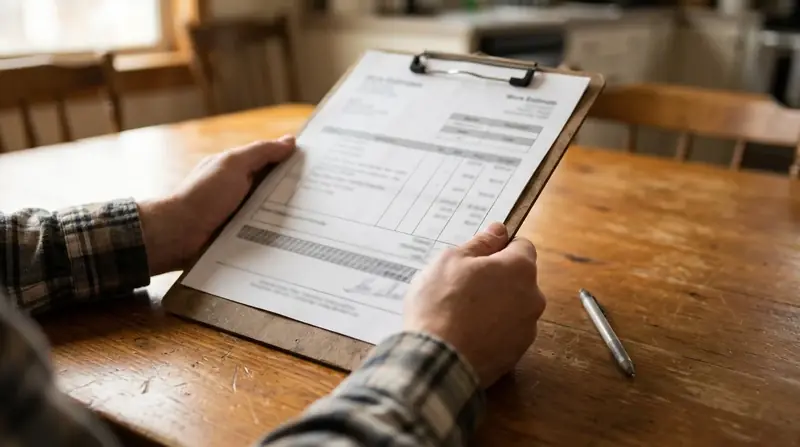
- Ask the company for an itemized bill, photos and the drying log.
- Compare the two line by line.
- Ask the company to send the adjuster its records for each line in dispute.
- Ask the insurer to explain any cut in writing.
The adjuster says the damage is covered, but not the whole bill. How?
Coverage and the amount paid are two separate questions. The insurer may agree the loss is covered but decide some work wasn't needed or cost too much.
Ask which lines were cut and why. California rules say a denial, in whole or in part, must be in writing and list every reason (Title 10, section 2695.7).
Can the insurer count the mitigation payment against the rebuild?
Usually both are part of the same claim, so they share the same policy limits. Ask the adjuster to show how the two estimates fit together. If a line seems to count twice or disappear, ask about it in writing.
How do you read the line items on a mitigation bill?
Match each line to something you saw or can check. Each line should show a task, a quantity and a unit price.
Many bills are written in Xactimate. Xactimate is property claims estimating software made by Verisk. Adjusters often use it too, so both estimates may use the same kinds of line items. Our water damage restoration cost guide shows what a typical bill includes.
Check these lines first:
- Rooms and square feet. Do they match your home?
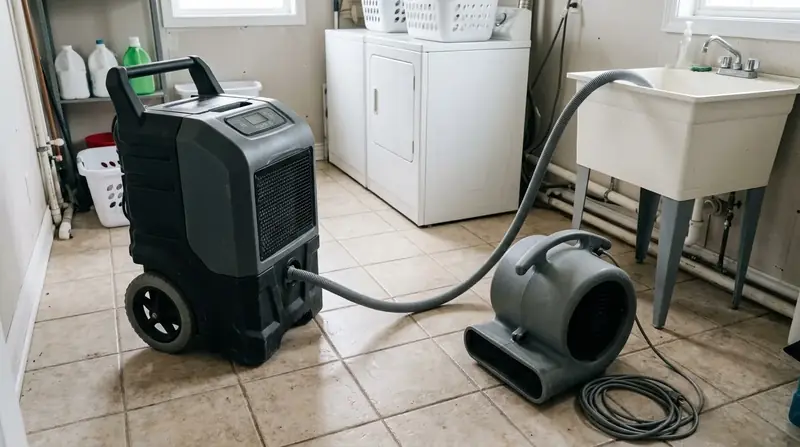
- Air movers and dehumidifiers. An air mover is a fan that blows air across wet surfaces. Check how many ran and for how many days.
- Demolition. Do the drywall, baseboard and carpet pad lines match your photos?
- Contents pack-out. This means moving your belongings out to be cleaned or stored. Storage is often billed by the month.
- Fees no one told you about in writing.
- Lump sums with no quantity, like "drying services" and one big number.
Do they really need 24 air movers for two weeks?
Maybe, but the drying log should show why. The amount of equipment depends on how much got wet and how fast the readings drop.
You can ask questions and push back on lines you don't understand. It works best before you sign. After the job, bring evidence, such as photos and readings, to the conversation.
The company asked for your insurance estimate after the job. Is that normal?
Some companies ask so they can compare their bill with what the insurer approved. It's your document, and you decide what to share. Ask why they want it and what they plan to do with it.
What are drying logs and moisture maps, and why do they matter?
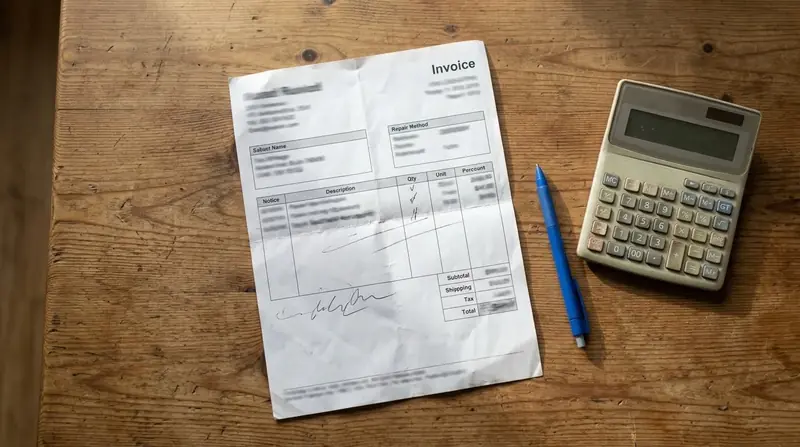
They are the proof behind each day of equipment. A drying log records moisture readings each day, and a moisture map shows where the wet areas were.
A moisture meter measures how wet drywall, wood or concrete is. Readings should drop day by day until the materials reach a dry target. When they do, the equipment can usually come out.
In some complaints we read online, missing drying logs went with insurers paying only part of the bill. Daily readings you can see are on our list of questions in how we work. That page is our answer to most of the problems on this page.
What if you were billed for work that didn't happen?
Ask for proof first, in writing. Photos, the written scope and the drying log should show each task that was billed.
This does happen. The cost guide lists reported cases, such as a charge for demolition that a customer said never took place.
What to do:
- Write down what you saw, and when.
- Ask the company to remove or explain the line.
- If the bill went to your insurer, tell your adjuster which lines you dispute.
- Don't sign a completion form that lists work you didn't see.
Is it fraud? It could be a billing mistake or something worse. You don't have to decide. Report the facts to your insurer. Complaints about a contractor's conduct go to the Contractors State License Board (CSLB).
The final bill is far above the estimate. What now?
Ask for a written explanation of every change from the estimate. Don't ignore letters about collections or a lawsuit.
Steps to take:
- Put the estimate and the final bill side by side.
- Ask whether you signed any written change orders. A change order is a signed change to the scope or price.
- Ask for photos and readings that support each added line.
- Reply to the company in writing, and keep copies.
If you're served with court papers, deadlines apply. Talk to a lawyer soon.
Can a restoration company put a lien on your home in California?
Yes. An unpaid contractor, subcontractor, laborer or supplier can record a mechanics lien on your property, the CSLB says. If the debt stays unpaid, the lien allows a foreclosure action that can force a sale.
A lien is a legal claim against your property for unpaid work. It's serious, but it runs on strict deadlines. The CSLB describes them this way:
- Subcontractors and suppliers generally send a preliminary notice within 20 days of starting work or delivering supplies. That notice is a warning, not a lien. The company you hired directly usually doesn't have to send you one.
- The lien generally must be recorded within 90 days after the work is done, or after you start using or accept it. If a notice of completion is recorded, the window is shorter.
- The claimant must file a lawsuit to foreclose within 90 days of recording the lien.
- If they miss these deadlines, you can ask in writing for the lien to be removed. If they refuse, you can ask a court to release it.
The CSLB says that court step is complicated and may need a lawyer. One person on Reddit reported a $193,000 mitigation invoice and a lien on their home. That's one self-report, not a typical case.
How do you protect yourself from a lien?
Ask for lien releases when you pay. The CSLB suggests getting a conditional release before each payment and an unconditional release after it. Signed releases from the people who could claim show the work was paid for.
The CSLB also suggests joint checks, made out to both the contractor and the supplier or subcontractor. Keep any preliminary notices you get.
Do you have to pay a big pack-out and storage bill to get your belongings back?
Read your storage agreement and call your insurer before you pay. Ask which part of your policy pays for pack-out and storage, and what limit applies.
One person on Reddit reported $29,000 for mitigation and pack-out, plus about $10,400 for three months of storage. They said their policy limit was $10,000. If a company won't release your things until it's paid, get legal advice before you pay or sign anything.
Can you switch mitigation companies in the middle of a job?
Usually yes, but read your contract first. You may owe for work already done, and some contracts charge a fee for ending early.
Before you switch:
- Tell your insurer, and ask how it will handle bills from two companies.
- Ask the first company for its photos, readings and drying log so far.
- Get the new company's written estimate.
- Take photos of the house and the equipment on the day you switch.
Contracts signed at your home often come with a right to cancel, but an emergency waiver can remove it. Our guide on how to choose a water damage company explains those rules.
What if your insurer suggested the company?
You still have choices. California rules say an insurer can't require you to use a specific company (Title 10, section 2695.9). A company on the insurer's suggested list is called a preferred vendor.
If you used a company the insurer suggested, tell your adjuster about the dispute in writing. Under the same rules, if you accept a company the insurer suggested, the insurer must see that your home is restored to no less than its condition before the loss.
Should you get your own Xactimate estimate or hire a public adjuster?
Either can help when the insurer's number seems too low. Ask what each costs first, and weigh that against the size of the gap.
Your own estimate. A restoration company or estimator can write an Xactimate estimate for you to compare with the insurer's. Ask the price before they start.
A public adjuster. A public adjuster is a licensed claims adjuster who works for you, not the insurer. The California Department of Insurance says public adjusters are paid a percentage of your claim recovery or an hourly rate. It says to first decide whether you need one or want to work with your insurer directly. It also says a public adjuster should not also be your contractor.
Appraisal. Many property policies have an appraisal section for disputes over the amount of a loss. In California's standard fire policy, either side can ask for appraisal in writing, and each side picks an appraiser (Insurance Code section 2071). Check whether your policy has one.
Can emergency mitigation work void a builder or roof warranty?
It depends on the warranty's wording. Ask the builder to name the clause it relies on, in writing.
Keep photos that show what the crew did and why it was urgent. Read more about new-home warranties on our slab leak water damage page.
Where can you get help with a dispute in California?
Claim problems go to the California Department of Insurance. Contractor problems go to the CSLB. Both help homeowners for free.
- Your claim: call the Department of Insurance hotline at 800-927-4357. You can also file a Request for Assistance with the Department.
- The contractor: file a complaint with the CSLB, and check the license.
- A lien or a lawsuit: talk to a lawyer.
Keep copies of your contract, bills, photos, drying logs and messages. They are your best evidence. For how claims work from the start, see water damage insurance claims in California. For deciding whether to file at all, see is a water damage claim worth filing?
Starting a new job and want fewer surprises?
Ask for a written estimate, daily readings and a written scope before anyone starts. Call (661) 592-2877 to be connected with a restoration company that serves your area. Calls are answered 24 hours a day, 7 days a week. You decide whether to hire anyone.
Lancaster Water Damage Restoration is a free referral service, not a contractor, an insurer or a public adjuster. When you call, you're connected with an independent restoration company that serves your area. That company sets its own prices and decides how it bills insurers. We can't settle a dispute between you and a company.
This page is general information, not legal or insurance advice. Your contract and your policy decide the details. For free help with a claim, call the California Department of Insurance hotline at 800-927-4357.
Water in your Lancaster home right now?
Shut off the main water valve, then call. You will be connected with an independent restoration company that serves your area.
Free call · referral service, not a contractor