
Lancaster, CA
Can You Dry Water Damage Yourself?
Sometimes. A small, clean-water spill on a hard floor that you catch fast is often a DIY job. Soaked carpet pad, wet walls, water under flooring or any dirty water usually needs professional drying.
- Free callYou pay this site nothing
- Line open 24/7Calls answered day and night
- No obligationGet an estimate, then decide
- Lancaster, CAZIP 93534 · 93535 · 93536
- License check guideHow to look up a CSLB license
Free referral service, not a contractor. You are connected with an independent restoration company. How this works
When can you dry water damage yourself?
You can usually handle it yourself when the water was clean, the area is small, and nothing soaked into walls or under the floor. You also need to be able to get it dry within about two days.
A DIY job usually looks like this:
- The water came from a clean source, such as a supply line or a sink that overflowed.
- It covered part of one room, not several.
- It sat on tile, vinyl or sealed concrete, not carpet.
- You found it within hours, not days.
- The walls and baseboards feel firm and show no stain or swelling.
Speed matters most. The EPA advises drying water-damaged areas and items within 24 to 48 hours to prevent mold growth.
When should you call a professional instead?
Call when the water is dirty, when it has spread into walls or under floors, or when you can't get things dry in two days. Those are the cases where hidden water leads to mold.
Get help if:
- The water came from a sewer line, a toilet with waste in it, or floodwater from outside. That is usually Category 3, or grossly contaminated, water.
- Carpet is soaked through to the pad.
- Water got under laminate, hardwood or vinyl plank.
- Drywall is wet, stained or soft more than a few inches up.
- Water came through a ceiling.
- More than one room got wet.
- You smell a musty odor, or you see spots of mold.
Don't clean up a sewage backup yourself. The EPA says that when water damage comes from sewage or other contaminated water, call in a professional with experience in that kind of cleanup. See sewage cleanup.
Will water damage dry on its own?
Surfaces may, but the water inside materials often won't dry fast enough on its own. Leaving it alone is how small leaks turn into mold jobs.
The EPA's flood cleanup page says things that stay wet for more than two days usually get moldy. Lancaster's dry desert air helps the surfaces you can see. It does little for water trapped behind walls, under cabinets or under floors.
That hidden moisture is the main risk. A wall can look fine while the bottom of the drywall and the wood behind it stay wet.
How do you quickly dry out a house after a small leak?
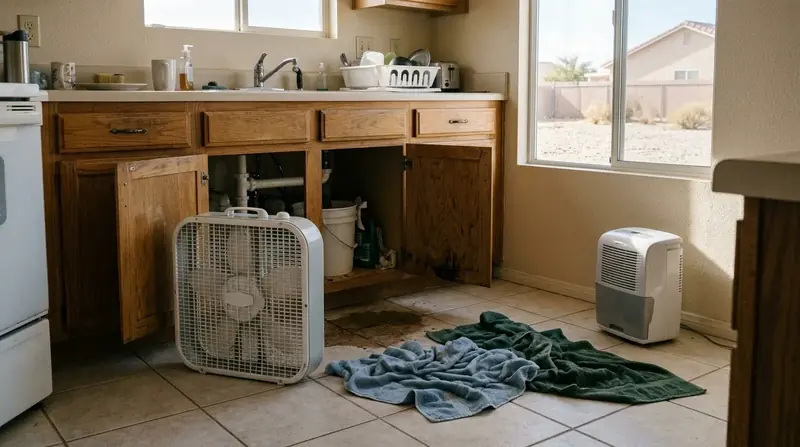
Stop the water, get the standing water out, then run a dehumidifier and fans in a closed room. Check the area each day until it is truly dry.
- Shut off the water. Use the valve under the fixture or the main shutoff.
- Stay safe around power. Don't step into water that touches outlets, cords or plugged-in appliances. Turn off the breaker for that area only if you can reach the panel from a dry spot.
- Take photos before you move anything, in case you need them for insurance.
- Remove standing water. Use towels, a mop or a wet/dry vacuum.
- Lift things off the floor. Move rugs, boxes and furniture to a dry room.
- Run a dehumidifier. Close the doors and windows so it isn't drying the outside air.
- Add fans. Point them across the wet floor or along the bottom of the wall.
- Check every day. Use a moisture meter if you have one, and compare with a dry spot.
For the first hour after a bigger leak, use our what to do after water damage checklist.
Can you dry it with fans alone, or do you need a dehumidifier?
You need both. Fans move water off a surface into the air. A dehumidifier takes it back out of the air.
The EPA's mold remediation guide lists three steps for wet carpet. Pull the water out with an extraction vacuum. Lower the humidity with a dehumidifier, and speed drying with fans. Fans alone just move damp air around.
Pros use air movers. They are strong, low fans built to blow across floors and walls. A box fan is weaker, but it still helps on a small, shallow spill.
Does wet drywall have to come out?
Not always. The EPA says wallboard may be dried in place if there is no obvious swelling and the seams are intact. If it is swollen, crumbling or the seams have opened, it is removed and replaced.
The EPA guide also says to ventilate the wall cavity if possible. That is why crews often pull the baseboard and drill small holes low in the wall.
Two cases mean the wall usually comes open:
- the insulation behind it is wet, since the EPA says wet fiberglass or cellulose insulation should be discarded and replaced
- the water was sewage or floodwater
Our water damage repair page covers what happens to walls, floors and cabinets that can't be saved.
Can wet carpet pad be dried, or does it have to be replaced?
Clean-water pad can sometimes be dried if extraction starts right away. Pad soaked with dirty water is thrown out.
Carpet pad sits under the carpet and holds a lot of water. A household fan rarely dries a soaked pad. It usually needs an extraction tool that presses water out, then strong drying.
For sewage or floodwater, the CDC's flood cleanup guidance says to throw away carpet and padding that can't be washed and disinfected. See emergency water removal for how carpet extraction works.
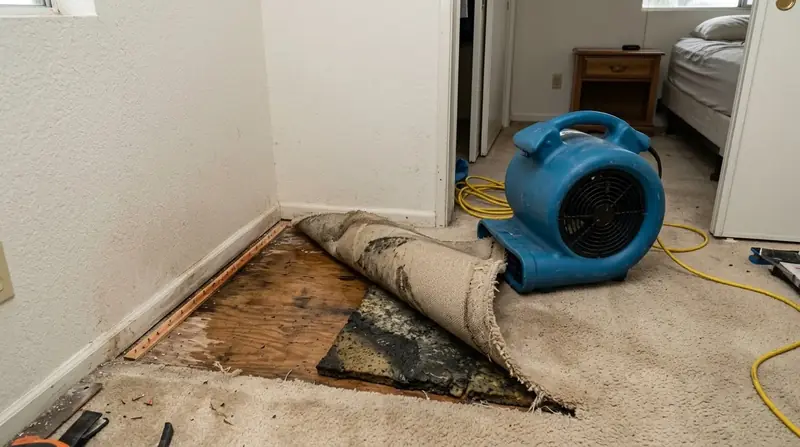
Water got under your laminate or hardwood. How urgent is it?
Treat it as urgent. Water under a floor can't dry well with the planks in place, and the clock starts when the leak starts.
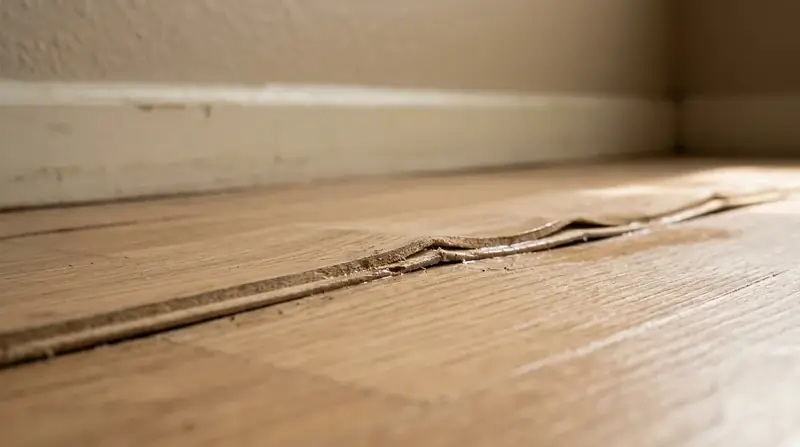
Laminate has a pressed-wood core. It swells when it soaks up water, and swollen laminate usually doesn't flatten again. Lifting a few planks near the wet area lets you see and dry what is underneath.
For wood surfaces, which include hardwood floors, the EPA says to remove moisture right away using dehumidifiers, gentle heat and fans. Boards that stay cupped or buckled after drying may need sanding or replacement.
For vinyl, linoleum and ceramic tile, the EPA says to check that the underflooring is dry. That is the part people miss. The surface wipes dry in minutes, while the subfloor below stays wet.
Do you really need a mitigation company, or can you save the money?
For a small, clean, surface spill, you can often save the money. For anything wet inside walls or floors, a pro is usually the safer choice.
Water mitigation means removing water and drying the building to stop more damage. Mitigation companies usually bring extraction tools, commercial dehumidifiers, air movers and meters. Ask for daily readings in writing, since your insurer may ask for them.
If you're unsure, you can ask a company to look at the damage and give a written estimate. You decide after that. Our water damage restoration cost guide shows what bills often include.
If you plan to file an insurance claim, ask your insurer first how it treats work you do yourself. Keep your photos and notes either way.
Not sure if your leak is a DIY job?
You can talk it through with a restoration company before you decide. Call (661) 592-2877 to be connected with one that serves your area. Calls are answered 24 hours a day, 7 days a week.
Calling doesn't oblige you to hire anyone. If a company comes out, ask first whether the visit has a fee, and ask for a written estimate.
Lancaster Water Damage Restoration is a free referral service, not a contractor. When you call, you're connected with an independent restoration company that serves your area. Your call may first be answered by a screening call center. That company gives you its own estimate, contract and license details. Check them before you sign anything.
This page gives you simple rules to decide. If you're still not sure, a call costs nothing and doesn't commit you to anything.
Water in your Lancaster home right now?
Shut off the main water valve, then call. You will be connected with an independent restoration company that serves your area.
Free call · referral service, not a contractor