
Lancaster, CA
Storm and Flood Prep for Lancaster, CA
Lancaster is dry most of the year, but one storm can bring a lot of rain at once. A little prep before the rain can keep water out of your home.
- Free callYou pay this site nothing
- Line open 24/7Calls answered day and night
- No obligationGet an estimate, then decide
- Lancaster, CAZIP 93534 · 93535 · 93536
- License check guideHow to look up a CSLB license
Free referral service, not a contractor. You are connected with an independent restoration company. How this works
When is storm season in Lancaster?
Mostly winter. LA County's storm season runs from October 15 to April 15, according to LA County Public Works (October 2025).
February is Lancaster's wettest month, with about 1.76 inches of rain. January averages about 1.46 inches and December about 1.11 inches. The whole year averages only 6.81 inches. These numbers are NOAA's 1991–2020 normals for the Fox Field weather station.
Summer storms are rare, but they happen. Tropical Storm Hilary dropped 3.59 inches at Fox Field on August 20, 2023 (NOAA). That is more than half of a normal year's rain in one day.
How bad have recent storms been?
Bad enough to close roads and cut off homes. Three storms in the last few years show what can happen here:
- August 20, 2023: Tropical Storm Hilary. LA County Fire rescued two stranded residents in Quartz Hill. Streets in Lake Los Angeles were still flooded the next day.
- February 4–6, 2024: 2.50 inches of rain at Fox Field, with a Flood Watch and a High Wind Warning. Sandbags were handed out.
- December 24, 2025: 2.11 inches of rain at Fox Field. A National Weather Service flood warning named Lancaster, Quartz Hill and Lake Los Angeles. LA County Public Works officials said more than 40 roads in the Antelope Valley were affected (CBS Los Angeles, January 2026).
After the December 2025 storm, homes near 110th Street East and Avenue K, in the east Antelope Valley, were cut off into January 2026.
Drainage is part of the story. The LA County Flood Control District does not serve the area north of Avenue S, which covers most of Lancaster (LA County Public Works). For what flood cleanup involves, see flood damage restoration.
Am I in a flood zone in Lancaster?
You can check by address on FEMA's Flood Map Service Center, at msc.fema.gov. LA County Public Works also has a Flood Zone Determination Website and a flood zone hotline at (626) 458-4321.
FEMA labels each area with a zone. Here is what the main ones mean, per FEMA:
- Zone A or AE: high risk. These areas have a 1% chance of flooding in any year, also called the 100-year flood.
- Zone X (shaded): moderate risk, between the 100-year and 500-year flood areas.
- Zone X (unshaded): minimal risk.
- Zone D: the flood risk has not been studied, but flooding is possible (LA County Public Works).
Parts of Amargosa Creek in Lancaster have mapped high-risk and moderate-risk floodplains (LA County Public Works).
Does a low-risk zone mean you're safe?
No. More than 25% of flood insurance claims come from outside the high-risk zones, LA County Public Works says.
That matters here. In 2009, a FEMA map update moved about 82% of 2,800 high-risk Lancaster parcels to a lower-risk zone (City of Lancaster, February 2009). A lower-risk zone is still not a no-risk zone.
Do you need flood insurance before storm season?
If you want it, buy it early. An NFIP policy usually takes 30 days to start, per FEMA and the California Department of Insurance.
Standard homeowners policies do not cover flood damage, the California Department of Insurance says. Flood coverage comes from a separate policy, such as one from the National Flood Insurance Program (NFIP).
Renters can buy flood insurance too. FEMA says renters can get NFIP coverage for their belongings, up to $100,000 (FEMA, 2018).
A burst pipe or roof leak is a different kind of loss than a flood. Our guide to water damage insurance claims in California explains what a home policy usually covers. The final answer always depends on your policy.
How do you get flood alerts in Lancaster?
Sign up for Alert Lancaster, the City's free alert system. You can also sign up for Alert LA County.
- Alert Lancaster: the City's official alert network. It covers high winds, road closures and other emergencies. You make a free account through Smart911. Search "Alert Lancaster" on the City's website to find the sign-up.
- Alert LA County: the County's opt-in alerts. You can get them by text, email or phone call. Search "Alert LA County" to register.
- Wireless Emergency Alerts: short emergency messages sent straight to cell phones. They are free and need no sign-up (FEMA). Check your phone's settings to make sure they're turned on.
- National Weather Service: the NWS Los Angeles/Oxnard office covers the Antelope Valley, including Lancaster.
What's the difference between a Flood Watch and a Flood Warning?
A watch means flooding is possible. A warning means it is happening or about to happen. These are the NWS definitions:
- Flood Watch: conditions are right for flooding. Get ready.
- Flood Warning: flooding is about to happen or already happening. Act now.
- Flash Flood Warning: a flash flood is about to happen or already happening.
- Flood Advisory: flooding may be a nuisance, but is not expected to be bad enough for a warning. Be aware.
Where can you get sandbags in Lancaster?
Free empty sandbags are at fire stations, and sand is available at six City sites. Bring your own shovel to fill them.
The City of Lancaster says all Antelope Valley fire stations offer 25 empty sandbags per person. The Lancaster stations it lists are:
- Fire Station 33, 44947 Date Avenue
- Fire Station 117, 44851 30th Street East
- Fire Station 129, 42110 6th Street West
- Fire Station 130, 44558 40th Street West
- Fire Station 134, 43225 25th Street West
- Fire Station 135, 1846 East Avenue K-4
The City's six free sand sites are:
- 615 West Avenue H, in the City Maintenance Yard lot
- the northeast corner of Avenue L-8 and 6th Street West
- 43000 North 30th Street East, at the Soccer Center (enter off 35th Street East)
- 44910 27th Street East, in the Tierra Bonita Park lot
- 32nd Street West and Avenue M, west of the drainage basin
- 44558 North 40th Street West, north of Fire Station 130
The City lists no hours, so call or check the City's website before you go. LA County also says you can fill sandbags with soil from your own yard.
How do you fill sandbags?
Don't overfill them. The City of Lancaster advises against overfilling, because overfilled bags can tear, don't stack well and leave gaps.
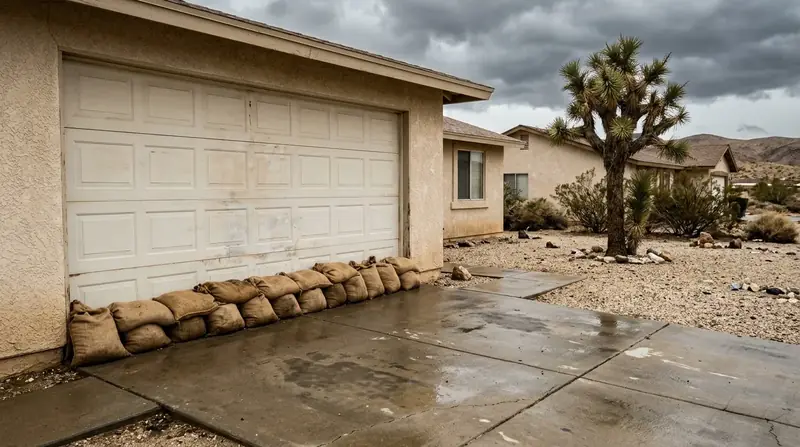
LA County says to use sandbags to steer runoff away from your home and toward the street. Put them where water would flow in, such as across a garage door or a low doorway.
How do you get your home ready before the rain?
Clear the drains, tie down loose things, and protect what matters. Most of these steps come from LA County's storm and flood guides.
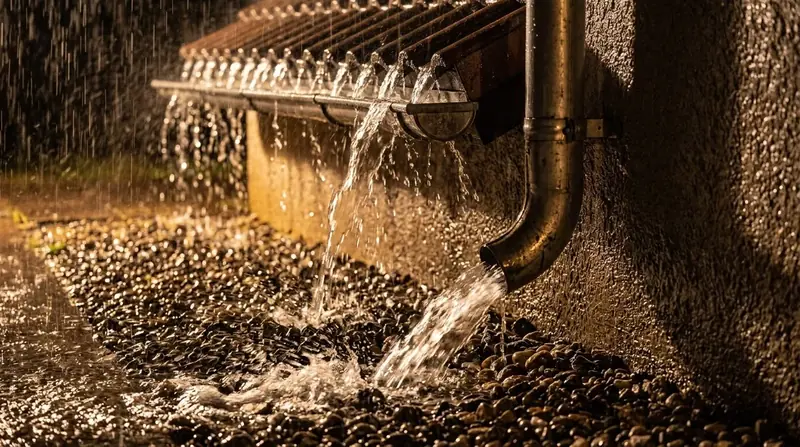
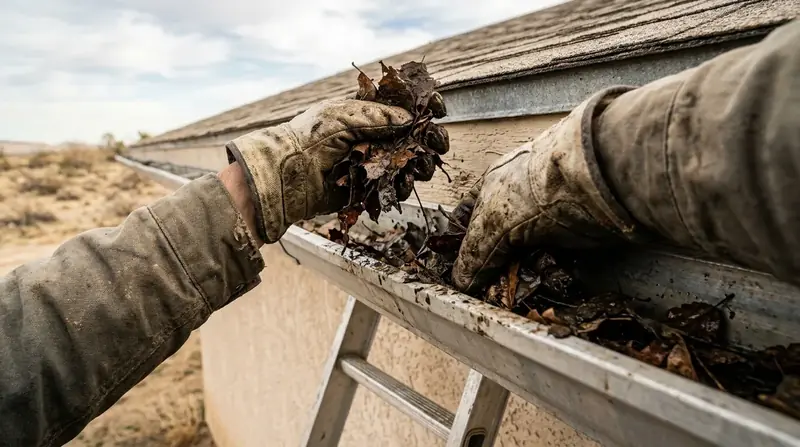
- Clear gutters, downspouts and outdoor drains of leaves, dirt and trash. LA County and Ready.gov both list this.
- Clear the drainage paths on your lot, so water can run away from the house.
- Secure trash bins and loose items that could blow or float away.
- Have weak trees checked by an arborist.
- Seal gaps around doors and windows.
- Move valuables and important papers up high, off the garage floor.
- Find your main water shutoff valve and make sure it turns. It's usually where the line enters the house, often near the front hose bib or in the garage.
- Take photos of your home and belongings before the season. They help if you ever need to file a claim.
- Build a kit with food and water for three days to a week, a flashlight, a radio, medicines and copies of documents (LA County).
What about the roof?
Look for wind damage before the rain comes. In Lancaster, strong wind often comes before or with a storm.
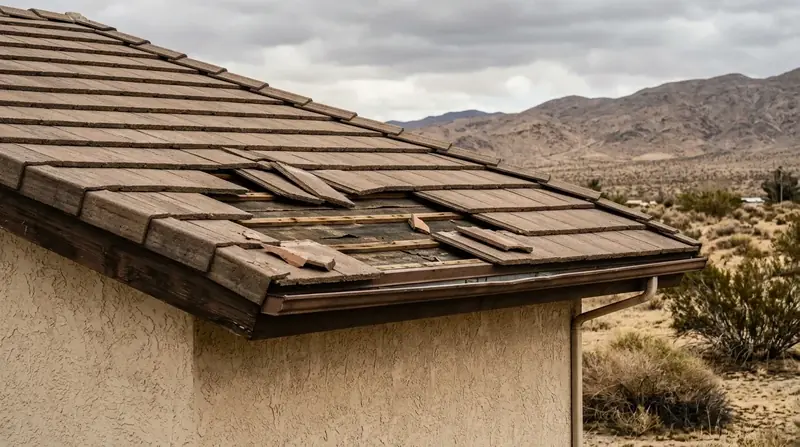
Fox Field recorded wind gusts of 70 mph on February 15, 2021, and 62 mph on December 27, 2024 (NOAA, preliminary). Wind can lift shingles or tiles and leave gaps. Rain then gets in through those gaps.
Look at the roof from the ground for missing or lifted shingles or tiles. If you see damage, have a roofer check it before the next storm. Don't climb onto a wet or windy roof.
What should you do during a storm?
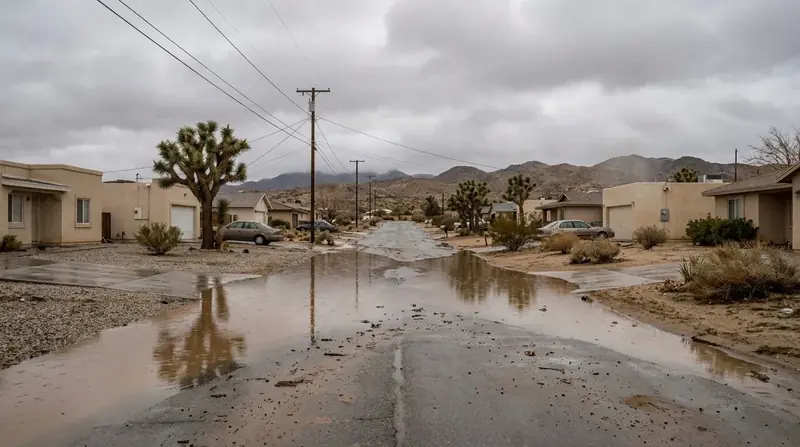
Stay off flooded roads and stay out of moving water. Floodwater is stronger and deeper than it looks.
The National Weather Service says 6 inches of fast-moving water can knock over an adult. It takes 12 inches of rushing water to carry away most cars, and 2 feet to carry away SUVs and trucks. Its rule is "Turn Around Don't Drown".
- Never drive around a barrier blocking a flooded road (NWS).
- Stay out of flood control channels (LA County).
- Turn on your headlights in the rain (LA County).
- Pooled water can hide road damage, the City of Lancaster warns.
What should you do if water gets into your home?
Get people safe first, then stop what you can and take photos. Treat floodwater as dirty water.
- Stay out of the floodwater if you can. The CDC says it can carry sewage and chemicals.
- Don't touch electrical equipment while standing in water. If you'd have to walk through water to reach the main power switch, call an electrician instead (CDC).
- Never touch a fallen power line (CDC).
- Gas: follow the SoCalGas rule in what to do after water damage. Shut off the gas only if you smell or hear a leak, and only if it's safe.
- Photograph everything before you clean up or throw things away.
- Start drying fast. The CDC says to dry flooded areas as soon as possible to prevent mold.
Floodwater counts as Category 3, the most contaminated class of water, under the IICRC S500 standard. Wet carpet, pad and drywall it touched usually have to go. A rain leak through the roof is often cleaner water. Our flood damage restoration page explains the difference.
Which parts of Lancaster need the most prep?
Homes on the east side and in unincorporated areas have flooded most recently. These pages cover the local details:
- East Lancaster and Lake Los Angeles: flooded roads in 2023 and 2025, and many mobile homes.
- Quartz Hill: the Hilary rescues, and LA County permits for repairs.
If freezing nights worry you more than rain, see how to prevent frozen pipes in Lancaster.
Did the storm already get in?
Call for help once everyone is safe. Call (661) 592-2877 to be connected with a restoration company that serves your area. If your road is closed, say so on the call. The company can plan the first safe visit.
Lancaster Water Damage Restoration is a free referral service, not a contractor. When you call, you're connected with an independent restoration company that serves your area. Your call may first be answered by a screening call center. That company gives you its own estimate, contract and license details. Check them before you sign anything.
This guide covers flood zones, alerts, sandbags, home prep and staying safe. If water is already coming in, call (661) 592-2877. Calls are answered 24 hours a day, 7 days a week.
Water in your Lancaster home right now?
Shut off the main water valve, then call. You will be connected with an independent restoration company that serves your area.
Free call · referral service, not a contractor