
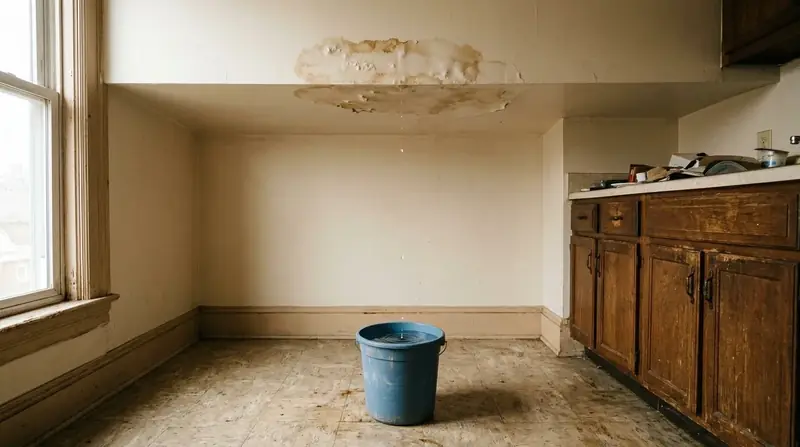
Water damage service · Lancaster, CA
Ceiling Leak and Roof Leak Water Damage in Lancaster, CA
Water dripping through the ceiling, a brown stain that keeps growing, or drywall that sags overhead. If that's happening in your Lancaster, CA home, call (661) 592-2877. We connect you with an independent restoration company that serves your area.
- Free callYou pay this site nothing
- Line open 24/7Calls answered day and night
- No obligationGet an estimate, then decide
- Lancaster, CAZIP 93534 · 93535 · 93536
- License check guideHow to look up a CSLB license
Free referral service, not a contractor. You are connected with an independent restoration company. How this works
Water is coming through your ceiling. What should you do right now?
Keep people out from under the wet spot, turn off power to that part of the ceiling, and catch the water. Then find and stop the source if you safely can.
- Stay out from under a sagging ceiling. Wet drywall is heavy and can fall without warning. Keep kids and pets out of the room.
- Turn off power to wet light fixtures and ceiling fans. Use the breaker if you can reach the panel without standing in water. Don't touch a fixture that is dripping.
- Catch the water. Put a bucket or trash can under each drip. A towel in the bucket cuts down on splashing.
- Move your things. Get furniture, electronics, rugs and papers out from under the leak.
- Stop the source. Turn off the AC or swamp cooler if it's running. If a pipe or water heater is the cause, shut off the main water valve.
- Take photos and video of the ceiling, the floor below and any damaged items. Note the time.
For a full first-hour checklist, see what to do after water damage.
Water coming through the ceiling? Call (661) 592-2877.
Should you poke a hole in a bulging ceiling?
Only if you can do it safely and stay out from under it. A bulge means water is pooling on top of the drywall.
Roto-Rooter, a national plumbing company, advises puncturing a small hole in the bulge, with caution. The goal is to let the water drain in a controlled way. That can keep the whole patch from coming down at once.
It is not risk-free. A wet ceiling can fall suddenly, and wiring may run nearby. Skip it if the bulge is next to a light fixture, or if the water could be from a toilet or drain line.
If you try it, turn off power to that area first. Put a bucket under the lowest point of the bulge. Stand to the side and use a long screwdriver. If the ceiling is cracking or hanging low, leave the room and wait for help.
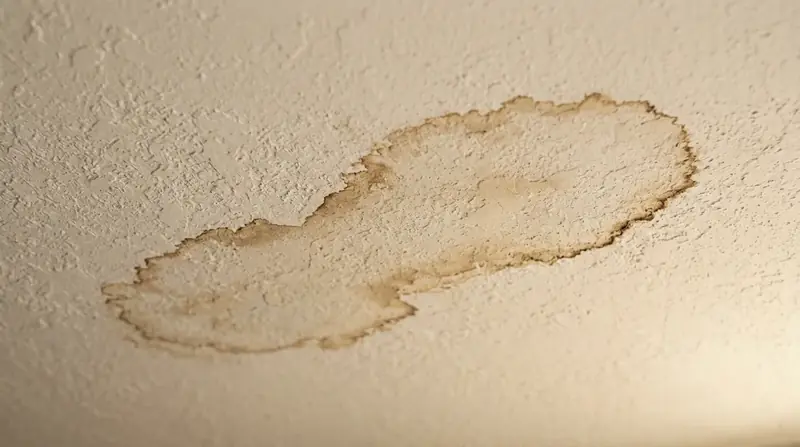
Where is the water coming from?
Look at the weather, the season and what sits above the wet spot. In Lancaster, the usual sources are the roof, the AC or swamp cooler, a pipe or water heater in the attic, or the unit upstairs.
- Rain or snow is falling, or just fell: likely the roof. Wind can lift shingles or tiles before the rain arrives.
- A hot day with the AC running: likely a blocked condensate line or drain pan. Condensate is the water an AC pulls out of the air.
- The cooler is running: a swamp cooler on the roof can leak through its roof opening. A swamp cooler is also called an evaporative cooler.
- A hard freeze, then a thaw: a frozen pipe in the attic may have split.
- No weather link, steady drip: a water heater, pipe or bathroom above. In a two-story home, check the toilet, tub and shower above the wet spot.
- You live in an apartment or condo: the unit above is a common source.
Why do these sources matter here?
Lancaster's weather sets up each one. The city averages about 36 days a year at or above 100°F (NOAA 1991–2020 normals, Fox Field). That puts AC systems under heavy load.
Winter brings freezes. Lancaster averages about 61 nights at or below 32°F from November through February (same NOAA normals). Pipes in an attic are among the first to freeze.
Apartments are common in central Lancaster. In ZIP code 93534, 35.6% of homes are in buildings with five or more units (U.S. Census Bureau, ACS 2020–2024).
For AC, cooler and water heater leaks, see water heater and appliance leaks.
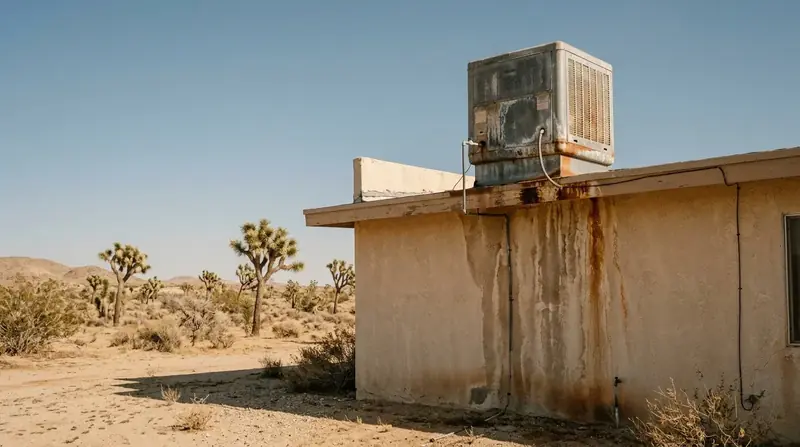
Do roof leaks happen much in a desert town like Lancaster?
Not often, but storms here can be heavy. Lancaster gets about 6.81 inches of rain in an average year (NOAA 1991–2020 normals, Fox Field). February is usually the wettest month.
A few storms have dropped a big share of that at once:
- Tropical Storm Hilary, August 20, 2023: 3.59 inches at Fox Field in one day (NOAA).
- February 24–25, 2023: 1.84 inches, with a snow advisory for the valley floor (NOAA; 10News).
- December 24, 2025: 2.11 inches at Fox Field (NOAA). National Weather Service flood warnings named Lancaster, Quartz Hill and Lake Los Angeles.
Wind adds to the risk. Fox Field recorded a 70 mph gust on February 15, 2021 (NOAA, preliminary). Lifted shingles or tiles often show up as a ceiling leak with the next rain.
Storm history by area is on our Quartz Hill and east Lancaster and Lake Los Angeles pages. To get the roof ready before a storm, see Lancaster storm and flood prep.
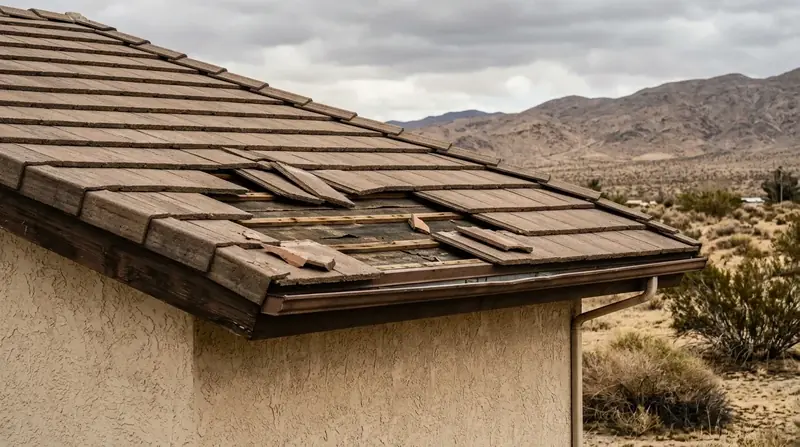
Who fixes what: a roofer or a restoration company?
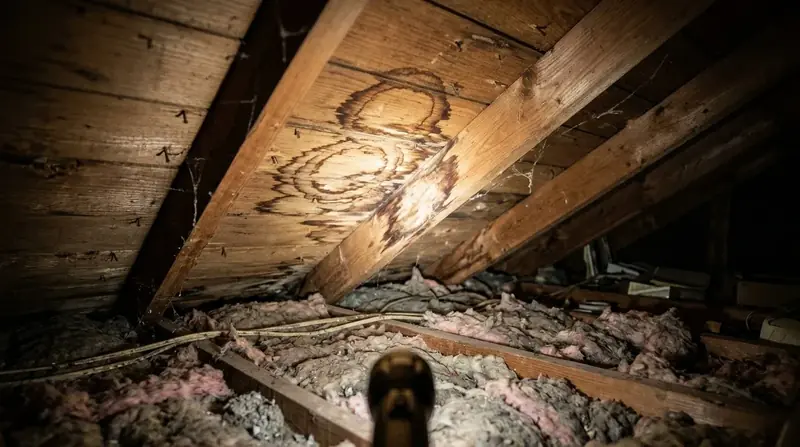
Usually you need both when the roof is the source. A roofer fixes the roof. A restoration company dries out the attic, ceiling and rooms below.
We connect you with a restoration company for the water damage. Some restoration companies can put an emergency tarp on the roof until a roofer can repair it. Ask the company you're connected with whether they do that.
The same split works for other sources. A heating and AC technician fixes the AC or cooler, and a plumber fixes the pipe or water heater. The restoration company handles the wet building.
Don't climb onto a wet or windy roof. Look from the ground, and take photos from there.
What does the restoration company do with a wet ceiling?
It finds how far the water spread, removes what can't be dried, and dries the rest. This first stage is called mitigation, which means stopping the damage from getting worse.
A typical ceiling leak job includes:
- Checking moisture with a moisture meter and often a thermal camera. Water runs along joists, so the wet area can be bigger than the stain.
- Checking the attic for wet insulation and wet wood.
- Removing wet insulation. The EPA says wet fiberglass and cellulose insulation should be thrown out and replaced.
- Removing ceiling drywall that sagged, swelled or crumbled. The EPA says wallboard may be dried in place if it isn't swollen and the seams are intact.
- Drying the attic and room with fans and dehumidifiers. Moisture readings are taken until things are dry.
Ask for photos and moisture readings in writing. Your insurer may want them.
Once it's dry, new drywall, texture and paint come next. That rebuild is covered on water damage repair.
Need a wet ceiling dried out? Call (661) 592-2877.
How fast can mold grow in a wet ceiling?
Fast enough that the first two days matter. The EPA says to dry water-damaged areas and items within 24 to 48 hours to prevent mold growth.
A ceiling is hard to dry from below. Wet insulation sits on top of the drywall and holds water against it. That is why soaked insulation usually comes out.
Watch for these signs over the next few weeks:
- a musty smell near the old stain
- dark spots or fuzzy growth on the ceiling
- a stain that comes back after you paint it
Don't paint over a water stain until the leak is fixed and the spot is dry. The EPA says paint over mold tends to peel. For more warning signs, see signs of hidden water damage and mold. If mold is already growing, see mold remediation.
Water is coming from the unit above you. What should you do?
Tell the neighbor or the landlord right away, then protect your own unit. The water won't stop until someone shuts it off at the source.
- Knock on the door above, or call the manager if no one answers.
- If you rent, tell your landlord in writing and keep a copy.
- In a condo, tell the HOA manager too.
- Take dated photos of your ceiling, walls and floor.
- Report it to your own insurer if you have renters or condo coverage.
Who pays depends on where the water came from and who was careless, if anyone. In a rental, California law lists waterproofing of the roof among the things a rental must have (Civil Code section 1941.1). For landlord, tenant, neighbor and HOA rules, see who pays for water damage.
Does homeowners insurance cover a ceiling or roof leak?
It depends on your policy and on what caused the leak. Policies usually treat sudden damage differently from slow damage.
Amica, a home insurer, says standard policies typically cover "sudden and accidental" water damage. It says gradual damage is commonly excluded. It also says a roof leak from wear and tear or poor upkeep usually isn't covered.
Here is how that often plays out with ceilings:
- Wind tears off shingles and rain pours in: often treated as sudden damage.
- An old roof that leaked a little every storm: may be treated as wear and tear.
- A pipe or water heater that suddenly fails: often treated as sudden damage.
- A slow drip that stained the ceiling for months: may be treated as gradual.
The roof itself and the damage inside may be handled differently. Ask your agent how your policy treats each one. Take photos before anything is removed, and keep receipts for emergency work.
This is general information, not legal advice. For the claim steps, see water damage insurance claims in California.
Get help with a ceiling leak in Lancaster
Keep people out from under the wet spot and catch the water. Then call (661) 592-2877 to be connected with a restoration company that serves your area. Ask for a written estimate before any tear-out starts.
Lancaster Water Damage Restoration is a free referral service, not a contractor. When you call, you're connected with an independent restoration company that serves your area. Your call may first be answered by a screening call center. That company gives you its own estimate, contract and license details. Check them before you sign anything.
The call is free. Calls are answered 24 hours a day, 7 days a week.

Water in your Lancaster home right now?
Shut off the main water valve, then call. You will be connected with an independent restoration company that serves your area.
Free call · referral service, not a contractor